

Clergy History
Since our church began in 1883 there have been a total of twelve Vicars installed in the Parish, the longest serving was The Rev’d. John Thomas followed by The Rev’d. George Passand Turner and then The Rev'd John Sampford. Our latest Vicar is The Rev'd Dr James Lawson, pictured right.
Below is a list of all the Vicars who have served here followed by a list of the Curates of the Parish. We are not adverse to women priests as will be seen in our recent Curates.

Vicars of the Parish
1883 - 1885 Rev’d. Percy Brent

1885 - 1910 Rev’d. George Passand Turner


The wall monument for The Rev'd. George Passand Turner and his wife Elizabeth is located inside the church near the West door.
1910 - 1936 Rev’d. John Thomas
No image available
1936 - 1941 Rev’d. Trevor Herbert H Kilborn

Rev’d. Trevor H.H. Kilborn. B.A.
Date of birth Sep 1905 Registered in Kettering (3b187)
It is reported in the April 1936 edition of the Parish Magazine that the Rev. Trevor H.H. Kilborn. B.A. had been appointed as the new vicar. His age was not mentioned; but he was educated at Wellingborough and then took a two-year course in administration work. He took his B.A. at Leicester (Honours English). He then read theology and prepared for Ordination at Bishops' College, Cheshunt. He was appointed Deacon in 1930 and Priest in 1931. He was travelling Secretary for the Student Christian Movement. In 1933 he was Curate of All Hallows, Lombard St. and Secretary of a society working for the Unity of the Churches. He is keenly interested in music and holds views of that of a Broad churchman. The fact that he has a wife is also mentioned in passing.
Induction at St Mary Magdalene on Friday 5th June 1936. After St Mary Magdalene he became Vicar of Sedgley. He died on the eve of All Saints' Day 1967.
There is an obituary for The Rev'd Trevor Kilborn below.
1941 - 1948 Rev’d. A Watford Deakin
No image available
1948 - 1953 Rev’d. R Boylette Stewart

The Rev’d. R Boylette Stewart was also a scout master.
1953 – 1958 The Rev’d. Prebendary Frank Coventry
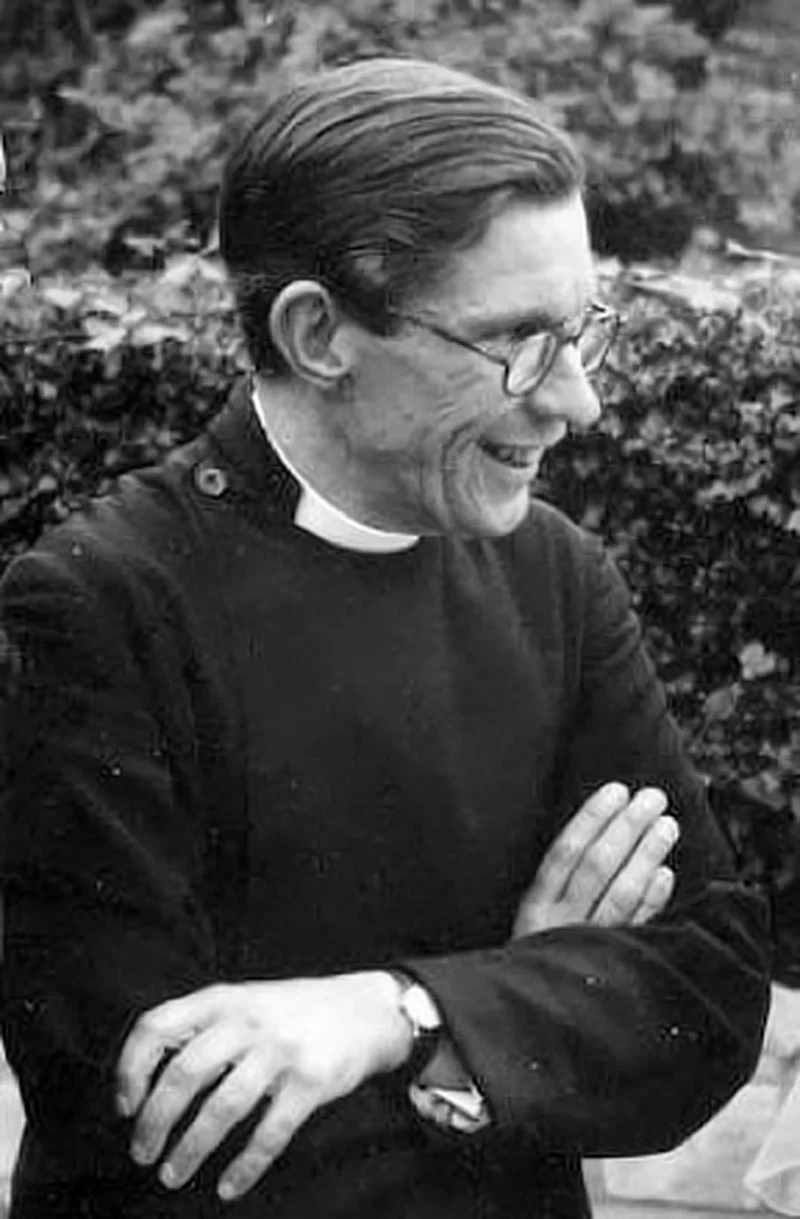
After completing a PhD for English Literature at Emmanuel College Cambridge, Dr Coventry taught English at Raynes Park Grammar School before training at Lincoln Theological College under Eric Abbott. He was curate at Dulwich for two years, and then Chaplain to the Theological Faculty at King’s College London for 5 years. He was Vicar of St Mary Magdalene, Enfield from 1953 to 1958 and then Rector of St Marylebone Parish Church, Marylebone Road, NW1, from 1958 until his retirement in 1978. He married Ursula Gaselee in 1948, having two daughters, the younger one born while at St Mary Magdalene.
There is an obituary for The Rev'd. Frank Coventry below.
1959 - 1966 Rev’d. Arnold Hellicar
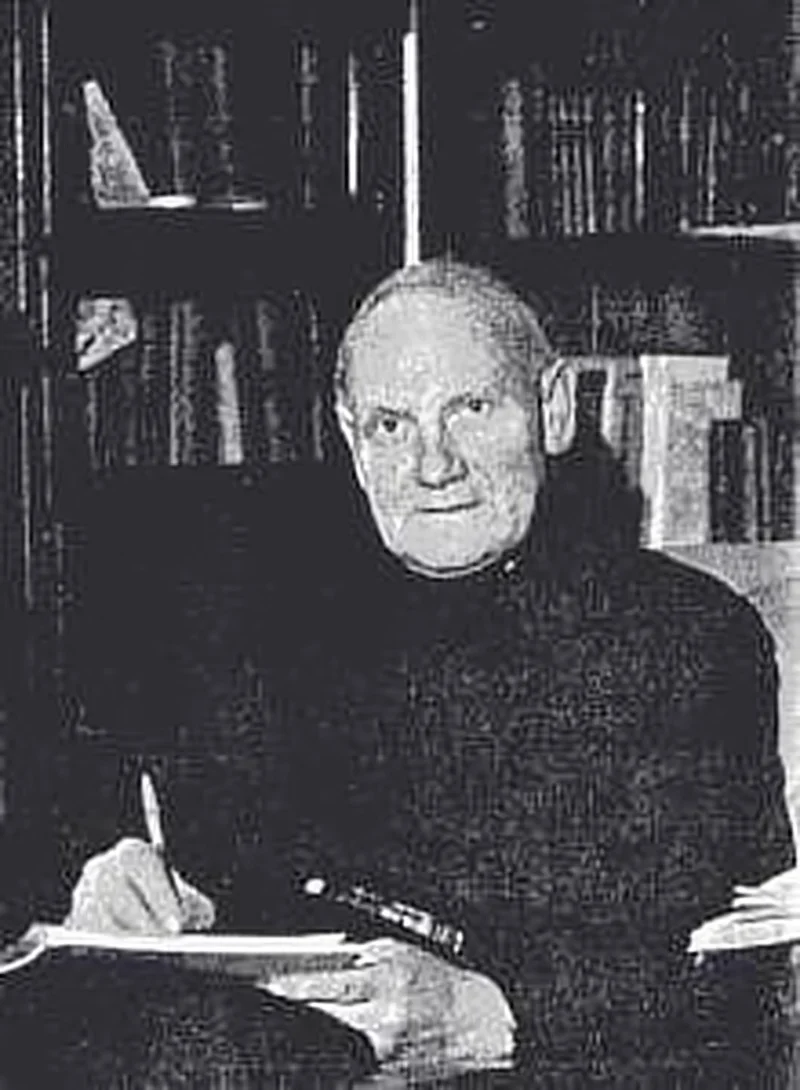
1967 - 1978 Rev’d. Cyril Witts
No image available
1979 - 2001 Rev’d. John Sampford

Trained at Lichfield Theological College
Curate 1961 - 1965 St Philip, Lambeth
Curate 1965 - 1969 Beddington
Vicar 1969 - 1979 Christ Church, Hampstead
Died 2013
Interred in our memorial Garden
There is a sermon given by The Rev'd Dr Gordon Giles on the day of The Rev'd. John Sampford's Interrment below.
2003 - 2020 Rev’d. Canon Gordon John Giles

Trained at Ridley Hall
Curate 1995-8 The Good Shepherd, Cambridge
Succentor, Minor Canon and Senior Cardinal, St Paul’s Cathedral 1998-2003
Director of Post-Ordination Training, Edmonton Episcopal Area, from 2008-2019
Canon Chancellor of Rochester Catherdal 2020-
The Rev’d Canon Gordon Giles was born in London and went to school in High Wycombe and Wales before studying music and aesthetics at Lancaster University. An M’Litt in Philosophy at Cambridge University followed and then he worked as Chaplain for the Missions to Seafarers in the North-east of England. After studying theology at Ridley Hall Cambridge, he was ordained in Ely Cathedral and served a curacy in a parish in urban Cambridge.
In 1998 he became Succentor of St Paul’s Cathedral in London, where he sang choral services and worked on large scale events such as the service after the 9/11 bombings; Millennium and Jubilee services. In 2003 he became Vicar of St Mary Magdalene's Church in Enfield, North London, and in 2008 also became director of Post-Ordination Training in the Edmonton Episcopal Area of London Diocese.
He has written several books on church music, hymnody and liturgy including ‘The Music of Praise’ (BRF/Hendrickson, 2002); ‘The Harmony of Heaven’ (BRF, 2003); ‘O Come, Emmanuel’ (BRF/Paraclete 2005); ‘O Clap your Hands’ (Paraclete/SPCK 2008) and ‘Fasting and Feasting’ (BRF 2008); ‘Comings and Goings’ (2015); ‘The Cambridge Carol Book’ (2017) and ‘At Home in Lent.’ (2018). His booklet ‘Praying Thrice’ (2012) was launched at the Hymn Society Conference in Lancaster 2013. He writes a regular hymn meditation in the RSCM's Church Music Quarterly and as well as being one of the editors of the newly published ‘Ancient and Modern’ hymnbook, he is also a Director of the English Hymnal Company. In 2012 was awarded a PhD by Middlesex University for his work on hymnody, liturgy and musicology.
Gordon accepted the Royal appointment to become Canon Chancellor of Rochester Cathedral beginning June 2020.
2021 - The Rev’d. Dr James Lawson
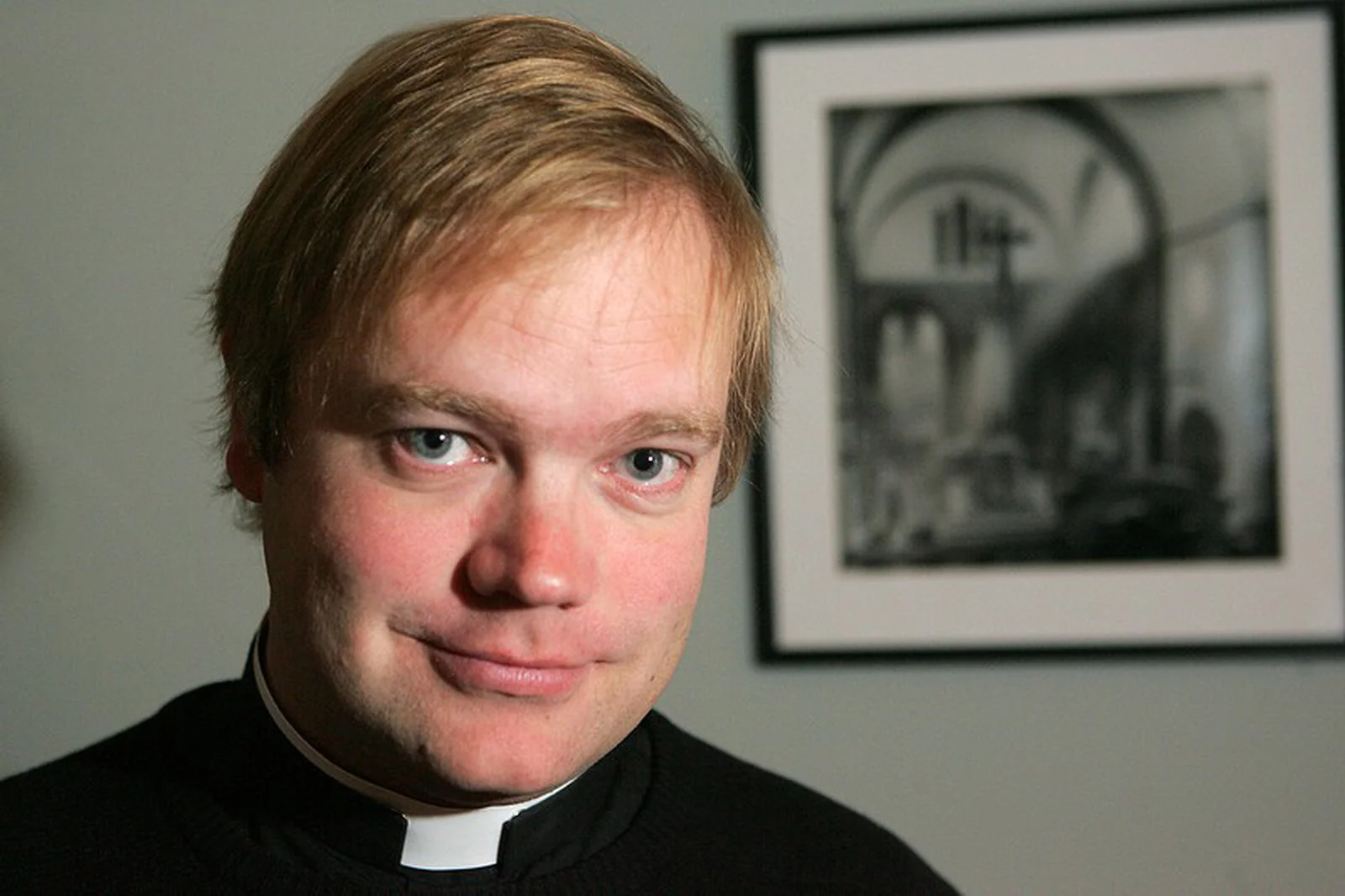
Father James studied history and theology at the University of Edinburgh, and went on to do a doctorate at New College Oxford, where he studied St Augustine’s reconfiguration of the Platonic ascent of the soul in the City of God. He trained for the priesthood at Mirfield and served his title at All Saints, Poplar in the East End of London.
He was Chaplain and Fellow of Corpus Christi College Cambridge, and then Senior Chaplain and Press Officer to the Bishop of Salisbury. He then served as Vicar of St Michael and All Angels, Stoke Newington Common in Hackney and Vice Principal and Charles Marriott Director of Pastoral Studies at St Stephen's House in Oxford.
He is married to Nana who is a psychologist.
If anyone is able to supply profile details or photographs of any of these Priests which could be added to this section, please contact us.
Curates of the Parish
| Dates | ~ | Curate name |
|---|---|---|
| 1886 - 1895 | ~ | Rev G. Vasey |
| 1889 - 1891 | ~ | Rev J.G. Bulman |
| 1891 Jan-Nov | ~ | Rev O.A. Archer |
| 1892 - 1896 | ~ | Rev J.H. Davis |
| 1896 - 1901 | ~ | Rev J.I. Ball |
| 1892 - 1907 | ~ | Rev G.D. Hughes |
| 1908 - 1909 | ~ | Rev C.V. Raynor |
| 1910 - ? | ~ | Rev W.J. Wright |
| 1914 - 1916 | ~ | Rev H.M. Bankart |
| 1916 - 1918 | ~ | Rev H. Daniels |
| 1918 - 1920 | ~ | Rev A.R. Johnson |
| 1920 - 1955 | ~ | No Curate |
| 1955 - 1960 | ~ | Rev Gordon Martin |
| 1960 - 1972 | ~ | No Curate |
| 1972 - 1973 | ~ | Rev Theo Cunningham-Burley |
| 1974 - 1979 | ~ | Rev Dr R. Macqueen |
| 1981 - 1982 | ~ | Rev Christopher S. Scott |
| 1985 - 1988 | ~ | Rev Jeffrey G. Heskins |
| 1989 - 1992 | ~ | Rev Jonathan W. Sewell |
| 1993 - 1996 | ~ | Rev Reginald H. Dunn |
| 1998 - 2002 | ~ | Rev Stephen Taylor |
| 2004 - 2017 | ~ | Rev Jackie Fish |
| 2010 - 2015 | ~ | Rev Maureen Lunn (Parish Deacon) |
| 2015 - 2021 | ~ | Rev Maureen Lunn ordained as Curate |
| 2024 - Present | Rev Michael Aylmer |
Obituary of The Rev’d. T. H. H. Kilborn, B.A. (1905—67)
Mr. Trevor Kilborn, who died on 31 October, 1967 at the age of 62, had a brief but memorable association with Goldsmiths’. During his time at the College he made a deep impression on his colleagues and students, and they made a deep impression upon him. He made a great number of friends and gained an affection for Goldsmiths’ that was to stay with him until his death.
Trevor Herbert Howl Kilborn was born on 29 July, 1905 at Desborough in Northamptonshire, in which neighbourhood his family had farmed for over three centuries. He was educated at Wellingborough School, where he excelled at mathematics, and at University College. Leicester, where he read English, acquired a lasting love for Blake, and succeeded C. P. Snow as President of the Union. Having chosen to enter the Church, he went to Bishop’s College, Cheshunt in 1928, and on his ordination two years later took up full-time work with the Student Christian Movement as the organisation’s first Travelling Secretary. [During this time he married his wife, Elizabeth.] In 1932 he became Curate of All Hallows, Lombard Street, while continuing to work for the S.C.M. in a voluntary capacity. Ecumenical in his outlook long before such views became fashionable, he played a leading part in the foundation (in 1933) of “The Friends of Re-union,” an experiment in “ecclesiastical joinery” (as he termed it) with which he remained associated, as Secretary, until 1947.
Trevor Kilborn was “ahead of his time” in other respects, too. One of the first Anglican clergymen to take cognisance of Freud, he resigned his curacy in 1935 to pursue the full-time study of psychology at University College, London. But the course was too academic for someone of his practical bent and after a year he returned gladly to pastoral work. [He did in fact complete his degree in psychology, by part-time study at Birkbeck College in the 1930s.] In 1936 he accepted an invitation to go to Enfield, Middlesex, where, as Vicar of St. Mary Magdalene, he was for a short time the youngest incumbent in the Diocese of London. Though deeply involved in parish affairs, his outlook was never “parochial” and in these critical pre-war years he was actively interested in the wider movement for Church renewal not only in England but throughout Europe. With Bishop Bell of Chichester he was a frequent participant in international gatherings of churchmen and once took part in secret negotiations in Denmark with anti-Nazi leaders. Among these was Dietrich Bonhoeffer, who was later his guest at Enfield.
In 1940 Trevor Kilborn accepted an invitation from his friend Edward Woods, Bishop of Lichfield, to become Vicar of Sedgley near Birmingham and Secretary of the Diocesan Youth Council. Here his care for the community expressed itself not only in his diligence as a pastor but in his leadership of the local A.R.P. At the end of the war, feeling the need for a wider field of service, he decided to seek secular employment. And so, in March, 1946, he began a “second career” and joined the staff of Goldsmiths’. His first appointment was as Head of Clyde House (later re-named Dean Hall), where his duties were shared by his wife Elizabeth. Later on he also served the College as Billetting Officer and as a part-time Lecturer in Scripture.
Looking after Clyde House in those days was a formidable task for the Kilborns (whose household now included their two small sons, Inigo and Hilary). Apart from the material problems involved in re-opening a house that had long been closed, there were the human problems involved in re-settling ex-servicemen. Here Trevor Kilborn’s skill in human relationships came into its own, and many of the “veterans” committed to his charge—some of them married men—were grateful for his wise and humane interpretation of rules made for schoolboys. The Head was much liked by the students at the Hall, and they were as sorrowful as he when, in the summer of 1952, he left the service of the College.
On leaving Goldsmiths’ Trevor Kilborn obtained a post as Warden of East Ham Evening Institute, where he spent his spare time working for a Diploma in Education—which he took in 1955 at the age of 50. Then, in September, 1957, he moved to the South-East London Day College, where he remained as Head of the General Education Department until his death. Here his outstanding gifts as a teacher were seen in his ability to demonstrate to unenthusiastic “day-release” students the pleasures to be derived from mathematics and from music. Himself a talented pianist and organist, with a mathematician's delight in Bach, his Musical Appreciation sessions were particularly memorable.
Trevor Kilborn was a man of many parts, but the abiding impression left by him is that of a very human being. Down to earth in his humour, outspoken in his dis-respect, impatient with men’s personas, he was (in the pre-puritan sense in which he liked to use the word) “vulgar.” He had the common touch. He had “a way with people” that was always disarming and could be disturbing. But, above all, he had compassion. It was compassion that led him to serve as the first chairman of the British Sponsoring Committee of the International Conference for the Defence of Children and to head the delegation to Vienna in April 1952. It was compassion that led him into the Church and out of the Church, into the Communist Party and out of it. It was compassion that led him to work for refugees, for C.N.D., for War on Want and for all the other causes into which at varying times he poured his restless energies. Compassion, perhaps, was the one consistent feature of his strangely “chequered” career.
Jeremy Goring.
Obituary of The Rev’d. Prebendary Frank Coventry
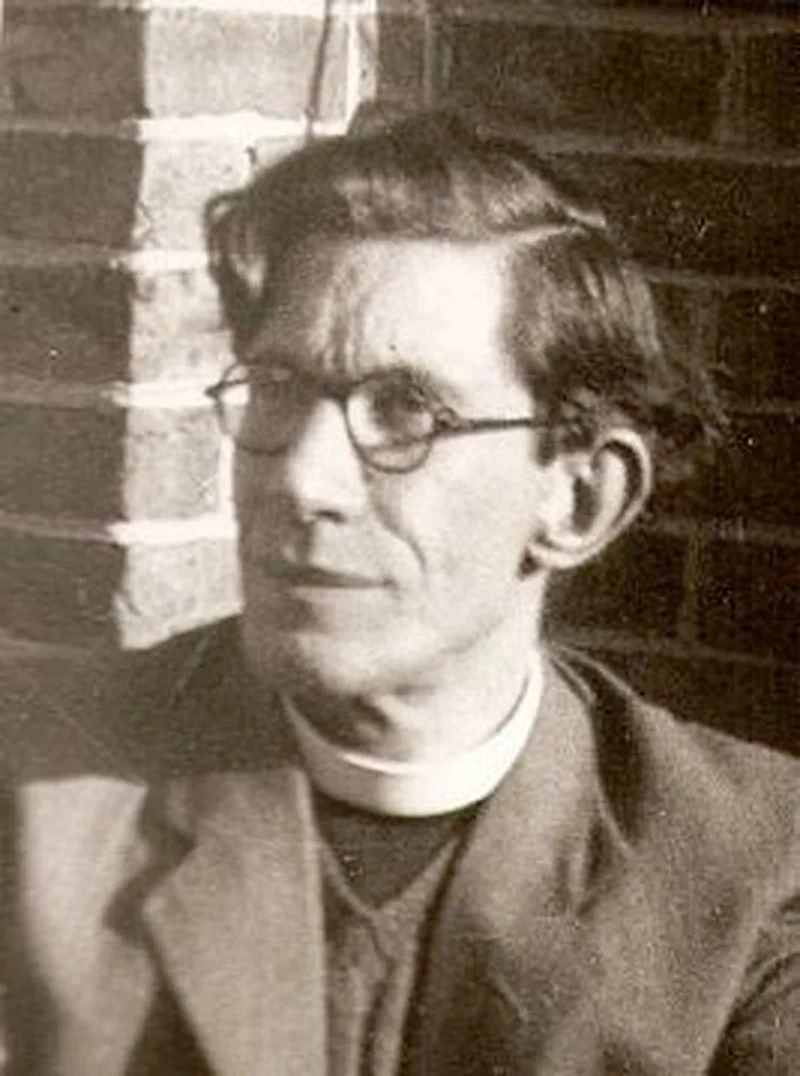
Prebendary Frank Coventry, Rector of St Marylebone, 1958-78, died on November 12 aged 81. He was born on April 2, 1913.
Frank Coventry was a scholar-parson whose long and distinguished ministry in London was fired by a firm Christian faith clothed in gracious English manners. In one sense, he represented an old-fashioned strand in the Church of England – and especially in the diocese of London – having no interest in ecclesiastical partisanship and being identified with no wing within the Anglican Church.
Born in South London, Frank Coventry was the youngest of the three children of James and Florence Coventry. His parents were Methodists and, though while up at Cambridge the young Coventry joined the Church of England – largely through the influence of C.S. Lewis and the appeal of the music and architecture of the Anglican tradition – he retained throughout his life a fondness and affection for his Free Church roots.
Educated at the Strand School, Brixton, he read English at King’s College, London, taking a first. Towards the end of his time there septicaemia left him gravely ill and he was not expected to live. Although he pulled through, much to the surprise of his doctors, his life was lived never far from the shadow it cast. At Emmanuel College, Cambridge, he pursued his study of sentiment and sensibility in 18th-century English literature, gaining a PhD for his thesis on the work of Richardson, Fielding and Johnson. It was there he met his wife Ursula, studying social science at the London School of Economics evacuated to Cambridge during the war. They were married in 1948.
Coventry taught English at Raynes Park Grammar School, numbering among his pupils the broadcaster Robert Robinson. The lack of spiritual values among the boys encouraged him to offer himself for ordination. Two years at Lincoln Theological College, under the direction of Eric Abbott, later Dean of Westminster, led to his ordination in 1946 and a curacy at All Saints, Dulwich.
Rejoining Abbott as chaplain and tutor at King’s College, London, in 1948 he spent five years there before being appointed vicar of St Mary Magdalene, Enfield in 1953. Coventry was heart and soul a parish priest and thrived on the round of parish activities. Following the sudden death in 1958 of the Rev J.B.H. Evans, the relatively youthful Rector of St Marylebone, Coventry was appointed by the Crown to the living which was to become his greatest work.
St Marylebone was an extremely busy parish to which he applied a pastoral heart, informed by his own physical frailty, and an effective preaching ministry to which he brought clarity and scholarship. Apart from one year spent on exchange with an Episcopalian clergyman in Charleston, South Carolina – where his impeccable English manner made a great impression – he devoted his energies to the people of St. Marylebone and to the many young curates given to him to train. In 1973 he was made a Prebendary of St. Paul’s Cathedral and on three occasions served as chaplain to the Lord Mayor of Westminster.
Retirement brought little respite from ecclesiastical duties and Coventry worked assiduously during vacancies at St. Mary, Brookfield, St. Mary Magdalene, Munster Square, and St. Saviour, Eton Road. The time he had for leisure pursuits was filled with music and architecture and he remained an able pianist to the end of his life. He and his wife were active members of the Hampstead branch of the National Trust and of the Heath and Old Hampstead Society. A man firm on the basis of the Christian faith, he wrote a book in defence of St. Paul.
He is survived by his wife and two daughters, a third daughter having died in infancy.
Sermon given by The Rev'd Dr Gordon Giles on the day of The Rev'd. John Sampford's Interrment
Companions on the Emmaus Road ~ Sermon Before the Interment of John Sampford
Luke 24:13-35
Today is a very special and unique day in the history of this church.
It is a day of resurrection, remembering and renewal.
It is a day of great emotion.
It is a day of sadness and of celebration.
It is a day of remembrance and recollection, a day of thanksgiving and reflection.
It is a day of care and prayer, a day of welcome and farewell.
It is a day of laying to rest and turning a page.
It is a day of looking back and looking forward.
Today, not entirely by coincidence, but not by accident either, we lay John Sampford to rest in the Memorial Garden he created, and we welcome his family, Mary especially, to be our companions again, and to remember and recollect the joys of his life and the sadness of his passing. And we gather around the Lord’s table to remind ourselves that in the great communion of saints and angels, we are not parted from him at all, any more than we are parted from our risen Lord. There could be no better Gospel reading for a day like this – although there is no other day like this – there could be no better text for today than the supper at Emmaus. For what we have just heard is also all about resurrection, remembering and renewing.
I shall return to those three things. But first, let us go to Emmaus.
Where is Emmaus? - No-one knows for sure. Some recent scholarship has suggested that there was no such place: we have arrived at ‘Emmaus’ as a truncation of the word ‘Oulammaus’, which in the Greek version of the Old Testament (The Septuagint) is the name of the place where Jacob dreamt of angels on a ladder going up and down to heaven (Genesis 28:10-19). While we now know that place as Luz, the Codex Bezae Cantabrigiensis, a fifth century manuscript now held in Cambridge, uniquely referred to the place of Jesus’ appearing to Cleopas and his colleague as Oulammaus, along with many other small textual variations. While this use of ‘Oulammaus’ would link the two stories nicely (Jesus appears to the two men where God revealed himself to Jacob), there is a mistake of translation built into this connection, but nevertheless one that was unidentified in the first century. There is therefore a view that the story emphasizes this throwback to Jacob, and that there is no need to contemplate where Emmaus might have been.
This does not mean the encounter did not take place, nor indeed that the village of Emmaus cannot be identified. St Luke tells us that Emmaus is about three times as far away (60 stadia or 10-12km), although he fails to mention in which direction! Consequently there have been various identifications of the village where Jesus breaks bread with his followers after the resurrection at what we might think of as an agape meal during which Jesus celebrates the first post-resurrection holy communion.
The earliest identification comes from Eusebius who identified Emmaus Nicopolis in the third century, and when Jerome translated his work, led posterity to believe that there was a church there built on Cleopas’ house. This ancient identification spawned the idea, seven hundred years later, that there could be a useful place of pilgrimage midway between Jerusalem and Emmaus Nicopolis, and so the Crusaders built a church on the Kiryat Anavim road, now known as Abu Ghosh. If Emmaus Nicopolis was where Cleopas lived, and where he invited Jesus to his house to eat and ‘abide with them’, as the hymn puts it, then there must be some place along the road where the risen Christ met them and walked.
The church of Abu Ghosh is very much open to visitors, and is a very beautiful, serene place. Many pilgrimage groups celebrate the eucharist there, and while the site may not have a watertight claim to authenticity, it has come to represent Emmaus and its wonderful story of casual conversation between the risen Christ and the downcast disciples, who recognize Christ in the breaking of bread. Originally built in 1140 but destroyed in 1187, it was rebuilt and is now run by Benedictine Fathers, who extend a peaceful and profound welcome. The church also has a fabulous acoustic for singing hymns or chants.
But Emmaus could have been anywhere, it would hardly matter. Cleopas’ companion is not given a name, and we might draw significance from this: his companion is Everyman, that is, you, or I. We are on that road, and countless others have walked it before us. For two thousand years the church has called, ordained and educated men and women to represent Christ on the roads of our lives and break bread –re-membering his call to ‘do this in remembrance of me’ and through the church has invited everyone to partake in a communion which is as much about companionship on the road as it is about consuming - and becoming - the body of Christ. The word ‘companionship’ itself breaks down into ‘com’ (with) and ‘pane’ (bread). So as companions on the way of Christ, we are truly those who walk together and break bread together. That is what companionship means.
Companionship arises, like Christ, in the re-membering of his body. The word remember means to re-member – to put back together, and is to be contrasted with dis-membering – to cut or break apart. The history of the Church of Christ has too many dis-membering moments in its history, but through it all has been the re-membering of Christ’s body in the celebration of communion each and every day, somewhere some time. Yet, ‘we are the body of Christ, by one spirit we are all baptized into one body’. It is we who are re-membered too. We remember Christ in the Eucharist, and we re-member ourselves as we gather in companionship around the Lord’s Table. So every gathering we make, as regulars or visitors, or indeed, as today, when we welcome into our midst old or long lost friends as well as complete strangers, we are re-membering ourselves. We are putting together our fragmented, dispersed, ever fluctuating community of those exploring the way. As we share the body of Christ we become the body of Christ - the bread eats us, as it were, and in doing so unites us with all who do so, or have ever done so. And that means we reunite with the loved and lost faithful; with John Sampford and with multitudes of others, who have been our companions on the way, and indeed with those who are yet to become so.
So we are here to remember – to remember John; to remember Christ in the eucharist, and to re-member ourselves as his body.
As well as remembering – re-membering – today is also a day of renewal. Renewed friendships and acquaintances, for sure, but also physical and spiritual renewal. This afternoon we shall formally mark the renewal of our Church Rear Garden, naming it the ‘Muriel Maxwell Garden of Peace and Play’. Muriel, another dear companion on the road and at the Lord’s Table, loved gardening and loved children. We honour her today in a different way to that in which we honour John, and her generosity was of a different kind. Their legacies complement each other, and remind us of the rich blend of time, talent, gifting and calling with which our community is blessed. Our stewardship campaign just launched, reminds us that we need money, of course, but we also need love. All you need is love, as the heathen singer put it – but you can’t keep a good idea down. Whether the Prime Minister is right – whether we are or should be a Christian Country or not, or whether to be Christian is actually to be an ancient Greek, as AC Graying put it in the Times this week – notwithstanding any of that, our calling here and now is one of service in the renewal of Christ’s Church. And that’s not something someone else does. And the money to build for renewal doesn’t come out of someone else’s pocket – it comes out of yours… and mine. And it will, I know. Which means I can also say ‘thank you’ today too!
We are the church – not the building. This building is simply the beautiful building under whose roof we gather, and of whose cultural and spiritual heritage we are custodians. We are rebuilding our entrance because it is the entrance – it is the way in. And it will be a revitalised way in to our shared life of prayer, care, praise and community engagement, through the arts, through charity and through friendship in and with our community. And we are all called to that. And we are all called to help find new ways in too, and to bring others through those new doors. So, please do try to bring newcomers and visitors to services and events: contribute to the feel good factor of fellowship, and surely the Spirit of God will dwell among us as we love one another and walk in Christ’s way, renewed in prayer and action.
As well as Remembrance and renewal, we are in the Easter Season, which is all about resurrection. The story of the Emmaus Road reminds us that built into Christian companionship is the remembering and exposition of scripture too. Cleopas and Everyman need to have the story explained, from both ends, as it were. They know their Jewish Scriptures, but Jesus needs to explain to them that they all point to him. Having done so, it all falls into place, and the scales fall from their eyes. It is a magical moment, a spiritual equivalent of a ‘eureka!’ moment. John Wesley famously described his conversion as like having his ‘heart strangely warmed’. In this story, word and sacrament combine to reveal the presence of Christ, Word made flesh and flesh made bread in one all converting experience. No wonder their hearts burned within them!
So as we take bread and wine today, as companions on the road well travelled, we unite ourselves with John, and Muriel and all who have kept the faith – and invested in the faith – here inn this place. And we give thanks to God, re-membering Christ, renewing our vision for the future and resurrecting the past, that our future may be blessed with a true spirit of confidence, creativity and compassion in the same Jesus Christ our risen Lord.
Amen.
The Rev'd Dr Gordon Giles, St Mary Magdalene, Enfield, 05/04/14


