

The Holy and Undivided Trinity
Read Time: 7 mins
Trinity Sunday 2024
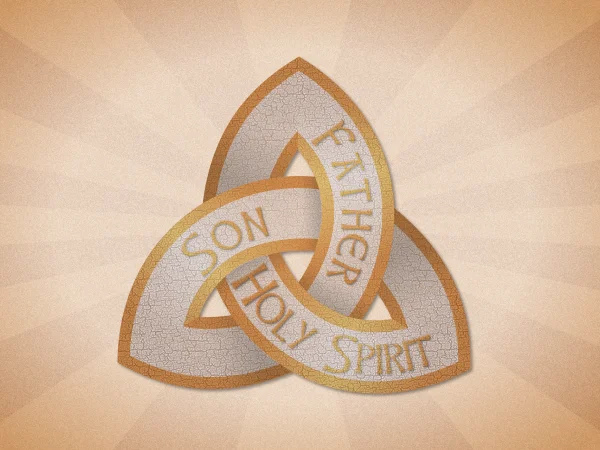
Today we keep the feast of the Holy and Undivided Trinity, the Father, the Son and the Holy Spirit.
We remember that by coming to us as the Son, revealing to us the Father, and sending to us the Spirit, Jesus revealed the deepest mystery; that God is not distant and alone, but is three in one, a communion of love who comes to make His home with us. In the words of a poet, God is “beyond, beside us and within”.
What this means for us was explained by one of the greatest theological teachers of the Church of England. His name is Charles Williams. Williams was a member of a group of writers called “The Inklings” who lived in Oxford about a lifetime ago. Other members were C.S. Lewis, who wrote “The Lion, the Witch and the Wardrobe,” and J.R.R. Tolkien, who wrote “The Lord of the Rings”. Williams has been called “the oddest Inkling”. He was an extraordinary man. He was a devout Anglican, but he was also a member of a secret society for the study of the occult and magic called the Order of the Golden Dawn. He wrote wonderful novels that that have been described as “supernatural thrillers”.
He died in 1945 and is buried in the churchyard of Holy Cross, in Oxford. I used to walk there when we lived in Oxford where my last job was. The churchyard is wonderfully wild and overgrown. It’s a haven for wild flowers, bees, and insects. Someone I’ve met wanted to visit William’s grave there not long ago. Not many people seem to visit it, and the paths are so tangled with long grass and nettles, he told me that he wondered whether he could find his gravestone. The place was quiet, deserted, and still. Just as he began to feel that he might never find the spot, there was a movement at his feet, and a beautiful black cat appeared, purring and rubbing itself round his legs; then it turned and walked away. He followed, and it led him straight to Williams’s grave, where it perched on a stone and asked to be stroked, purring all the time.
It was all a little bit uncanny. He felt as if he was in the opening scene of one of Williams’s novels; for, unlike his friends Lewis and Tolkien, he did not set his books in imaginary worlds, but in our own, and it is into this familiar world that the magical powers, the supernatural and spiritual presences, come unbidden.
The person who told me that story also told me that he had met someone else who had visited Charles Williams’ grave who said that he had had a strange, almost a mystical, experience there. He had somehow also got lost in the tangled paths and he couldn’t find the grave. Then, from out of the undergrowth, there stepped a beautiful red fox, which looked at him, turned around, and trotted down the path that led him straight to Williams’s grave.
Ancient theologians described the interrelationship of the three Persons of the Trinity as being like an eternal dance – in Greek the word is perichoresis. The Father, Son, and Holy Spirit love one another so completely that their lives are mutually interwoven, mutually interdependent. The word perichoresis is also the name of a dance you might see if you go to Greek wedding in Enfield. In this dance, there are not two dancers, but at least three. They start to go in circles, weaving in and out, in a wonderful pattern of movement.
Charles Williams used another beautiful word to describe the mystery of the Trinity and what it means for us. The word is “coinherence.” Our lives in the Mystical Body of Christ can become “coinherent”. They can become mutually interwoven and interdependent. They can become like the lives of the persons of the Holy Trinity, as imaged in that wedding dance. Williams taught that our love for each other gives us something like a magical power. As our lives become coinherent, we can begin to bear each other’s burdens. In a kind of Exchange or Substitution, William taught, people can make agreements to bear one another’s burdens—quite literally, physically, regardless of the nature of the burden. Williams claims that the mockery thrown at Christ on the cross, He saved others, but he cannot save himself,” was actually the basic expression of a universal principle: nobody can save himself, but we can voluntarily substitute ourselves for others and “carry their burdens” quite literally, even though those burdens may be spiritual, emotional, or medical. For instance, if you know someone who is suffering from cancer, or from grief over the loss of a spouse or child, you can take that cancer or that grief and carry it instead of you. These principles can work among the living at any place and time, and also with the dead and the unborn. You can take the fear or pain away from a deceased ancestor, bearing it in her place. That is the idea. It’s like a magical power that you have as a Christian. No one’s told you about it yet.
The persons of the Trinity are three yet one because they co-inhere. Their life depends on mutual giving and receiving, substitution and exchange. Each of the divine persons lives for and through the other, not for themselves. That is how they live in perfect union.
In the Church we live this same divine life, a life that is shared at its very source, a life that is communicated from one to another, as the sap of the Vine is given through the greater branches to the less. So when you can’t pray, another Christian can pray for you. When you can’t carry a burden alone, another Christian can share it with you. This is the work of the Mystical Body of Christ. The Church realises on earth the great Coinherence of the Holy and Undivided Trinity in the Coinherence of the Saints. This is what we are part of in this church. So let us bear each other’s burdens consciously, willingly and joyfully. For as Charles Williams wrote:
Blessed be He that He has made us members one of another and all members of Him… Blessed be He that He has quickened among [us] the unity, exchange and substitution of love which is the pattern of Himself… Blessed be He that He continually makes all things new.
Amen.
The Rev’d Dr James Lawson,
St Mary Magdalene Enfield,
26/05/2024
May. 17, 2026
Ulrich Zwingli and The Sausage

May. 10, 2026
Seeking Fulfilment?

May. 03, 2026
The way, the truth and the life

Apr. 19, 2026
Jesus, Peter and the Path
Apr. 12, 2026
Doubting Thomas?
Mar. 22, 2026
The Resurrection of Lazarus

Feb. 01, 2026
Simeon the Sentry

Jan. 11, 2026
The Suffering Servant

Jan. 04, 2026
The Epiphany

Dec. 28, 2025
Massacre of the Holy Innocents

Dec. 21, 2025
The King’s Arrival

Dec. 07, 2025
Advent: Our longing and yearning for Christ
Talks Archive
Trinity Sunday 2024
Today we keep the feast of the Holy and Undivided Trinity, the Father, the Son and the Holy Spirit.
We remember that by coming to us as the Son, revealing to us the Father, and sending to us the Spirit, Jesus revealed the deepest mystery; that God is not distant and alone, but is three in one, a communion of love who comes to make His home with us. In the words of a poet, God is “beyond, beside us and within”.
What this means for us was explained by one of the greatest theological teachers of the Church of England. His name is Charles Williams. Williams was a member of a group of writers called “The Inklings” who lived in Oxford about a lifetime ago. Other members were C.S. Lewis, who wrote “The Lion, the Witch and the Wardrobe,” and J.R.R. Tolkien, who wrote “The Lord of the Rings”. Williams has been called “the oddest Inkling”. He was an extraordinary man. He was a devout Anglican, but he was also a member of a secret society for the study of the occult and magic called the Order of the Golden Dawn. He wrote wonderful novels that that have been described as “supernatural thrillers”.
He died in 1945 and is buried in the churchyard of Holy Cross, in Oxford. I used to walk there when we lived in Oxford where my last job was. The churchyard is wonderfully wild and overgrown. It’s a haven for wild flowers, bees, and insects. Someone I’ve met wanted to visit William’s grave there not long ago. Not many people seem to visit it, and the paths are so tangled with long grass and nettles, he told me that he wondered whether he could find his gravestone. The place was quiet, deserted, and still. Just as he began to feel that he might never find the spot, there was a movement at his feet, and a beautiful black cat appeared, purring and rubbing itself round his legs; then it turned and walked away. He followed, and it led him straight to Williams’s grave, where it perched on a stone and asked to be stroked, purring all the time.
It was all a little bit uncanny. He felt as if he was in the opening scene of one of Williams’s novels; for, unlike his friends Lewis and Tolkien, he did not set his books in imaginary worlds, but in our own, and it is into this familiar world that the magical powers, the supernatural and spiritual presences, come unbidden.
The person who told me that story also told me that he had met someone else who had visited Charles Williams’ grave who said that he had had a strange, almost a mystical, experience there. He had somehow also got lost in the tangled paths and he couldn’t find the grave. Then, from out of the undergrowth, there stepped a beautiful red fox, which looked at him, turned around, and trotted down the path that led him straight to Williams’s grave.
Ancient theologians described the interrelationship of the three Persons of the Trinity as being like an eternal dance – in Greek the word is perichoresis. The Father, Son, and Holy Spirit love one another so completely that their lives are mutually interwoven, mutually interdependent. The word perichoresis is also the name of a dance you might see if you go to Greek wedding in Enfield. In this dance, there are not two dancers, but at least three. They start to go in circles, weaving in and out, in a wonderful pattern of movement.
Charles Williams used another beautiful word to describe the mystery of the Trinity and what it means for us. The word is “coinherence.” Our lives in the Mystical Body of Christ can become “coinherent”. They can become mutually interwoven and interdependent. They can become like the lives of the persons of the Holy Trinity, as imaged in that wedding dance. Williams taught that our love for each other gives us something like a magical power. As our lives become coinherent, we can begin to bear each other’s burdens. In a kind of Exchange or Substitution, William taught, people can make agreements to bear one another’s burdens—quite literally, physically, regardless of the nature of the burden. Williams claims that the mockery thrown at Christ on the cross, He saved others, but he cannot save himself,” was actually the basic expression of a universal principle: nobody can save himself, but we can voluntarily substitute ourselves for others and “carry their burdens” quite literally, even though those burdens may be spiritual, emotional, or medical. For instance, if you know someone who is suffering from cancer, or from grief over the loss of a spouse or child, you can take that cancer or that grief and carry it instead of you. These principles can work among the living at any place and time, and also with the dead and the unborn. You can take the fear or pain away from a deceased ancestor, bearing it in her place. That is the idea. It’s like a magical power that you have as a Christian. No one’s told you about it yet.
The persons of the Trinity are three yet one because they co-inhere. Their life depends on mutual giving and receiving, substitution and exchange. Each of the divine persons lives for and through the other, not for themselves. That is how they live in perfect union.
In the Church we live this same divine life, a life that is shared at its very source, a life that is communicated from one to another, as the sap of the Vine is given through the greater branches to the less. So when you can’t pray, another Christian can pray for you. When you can’t carry a burden alone, another Christian can share it with you. This is the work of the Mystical Body of Christ. The Church realises on earth the great Coinherence of the Holy and Undivided Trinity in the Coinherence of the Saints. This is what we are part of in this church. So let us bear each other’s burdens consciously, willingly and joyfully. For as Charles Williams wrote:
Blessed be He that He has made us members one of another and all members of Him… Blessed be He that He has quickened among [us] the unity, exchange and substitution of love which is the pattern of Himself… Blessed be He that He continually makes all things new.
Amen.
The Rev’d Dr James Lawson,
St Mary Magdalene Enfield,
26/05/2024


