

Jesus, Peter and the Path
Read Time: 6 mins
May the words of my mouth and the meditation of my heart be always acceptable in your sight O God, my strength and my redeemer. Amen.
“The Lord has risen indeed, and he has appeared to Simon!” So ends our gospel passage.
Today I want to particularly focus on the story of Simon Peter we have heard in our readings this morning. And it may be helpful to remember the order of events of that first Easter Day – first the women go to the empty tomb, then Peter and John go to the empty tomb, then the Risen Christ appeared to Mary Magdalene, then to Simon Peter, then to the two on the road to Emmaus, and then to the Eleven disciples, minus Thomas. That’s all on Easter Day.
But what did Jesus say to Peter, in that first encounter on Easter day? What did Peter say to Him? We are not told, all we are told is that when the two disciples, probably Clopas and his wife Mary, had turned back from Emmaus after encountering Jesus, they told the Eleven disciples minus Thomas that Jesus was alive, and they said they already knew as Jesus had already appeared to Simon Peter. We do not know what Jesus and Peter said to each other on this occasion, though on a later occasion Christ three times asked Peter if he loved him, and three times told him to tend his flock. But Bonaventure’s Life of Christ piously imagines the scene between Jesus and Peter on Easter Day as follows:
For when Mary Magdalene returned to the house, and told the disciples that the Lord has risen, Peter, grieving that he had not seen his Lord, nor able to rest for the strength of his love for his Lord, departed from them, and went alone towards the Sepulchre; for He didn’t know where else to go in search of Him. And while He was on the road, the Lord Jesus appeared to him, saying, “Peace be to you, Simon.” Then Peter, smiting his breast, and falling to the ground, cried out with tears, “O Lord, I acknowledge my fault, that I forsook you, and many times denied You,” and he kissed His Feet. Then our Lord raised him from the ground, and embraced him, saying, “Peace be unto you; fear not, all your sins are forgiven you; I knew well what would happen, and forewarned you. Now, therefore, go and strengthen the brethren, and be strong, for I have conquered death, and all your enemies and adversaries.” And Peter and the Lord remained and talked together. The Lord then gave him His blessing, and Peter returned to the other disciples, and related all that had happened.
This seems to me a plausible version, and is taken from hints in the Gospels, but the truth is, we don’t know what Jesus said to Peter on this occasion, or what Peter said, for the simple reason that Peter seems not to have discussed it. For he who had denied his friend and master and run away, that private Easter conversation was too personal, and Peter seems to have had a true sense of humility about it.
And it is striking, that in Peter’s succinct summary of the Gospel in Acts that we heard, humility is again a major theme of his speech. He doesn’t say Christ has defeated death, job done everyone rejoice and go home. Instead he says:
‘Let the entire house of Israel know with certainty that God has made him both Lord and Messiah, this Jesus whom you crucified. Repent, and be baptized every one of you in the name of Jesus Christ so that your sins may be forgiven; and you will receive the gift of the Holy Spirit. For the promise [of grace] is for you, for your children, and for all who are far away, everyone whom the Lord our God calls to him.’
Repentance. Humility. Those are the watch words of Peter’s speech, as well as celebration.
At this time in the world there are two main corruptions of Christianity that are not grounded in humility. One is the corruption of the Russian Orthodox Church under its Patriarch Kirill who has used the Church to support Putin’s evil war on the Ukrainian people. Kirill said of Russian soldiers who died fighting in Ukraine “we believe that this [dying, fighting Ukrainians] washes away all the sins that a person has committed.” This is an ancient heresy – he seems to have forgotten that it is not our deeds and works that wash away our sins, but only Jesus’ sacrifice on the cross on our behalf. Saying otherwise is putting ourselves in place of God.
And on the other hand, we have a US administration that invokes God in support of its chaotic war on Iran. The US President embarked on a war with no fixed goal, and no strategy beyond bombing changing targets as much as possible. Jesus asked in Luke chapter 14: “suppose a leader is about to go to war against another leader. Won’t he first sit down and consider whether he is able with ten thousand men to oppose the one coming against him with twenty thousand?” Proverbs 24 also incidentally says: “Only with sound guidance should you wage war, and victory lies in a multitude of counsellors.” Any other path is the Enemy’s one of hubris and arrogance.
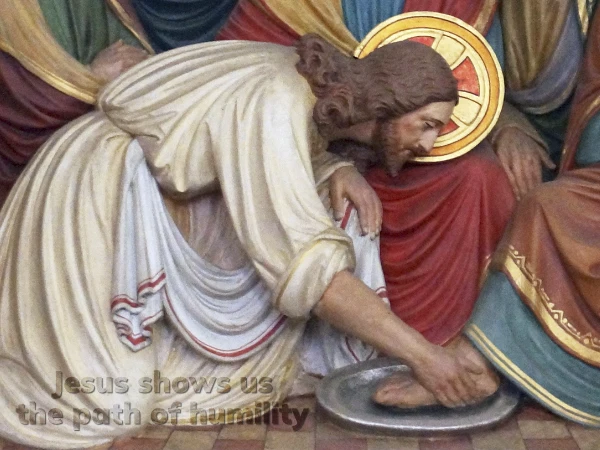
We live in a time where national movements seek to weaponise our religion against others. Christianity is not the business of recruiting God to serve our agendas, but rather of putting our agendas at the service of God. The path of faith Jesus showed us, is the path of humility before others, and humility before God. Our task and calling is the narrow path of following Christ humbly; for that is the path to eternal life, and the full blessedness of the heavenly kingdom which Christ gives to his faithful followers. The risen Christ came and stood among his disciples and said, ‘Peace be with you.’ May Christ’s peace be with us and upon the world, this Eastertide and forever after.
Amen.
The Rev. Michael Aylmer,
St Mary Magdalene, Enfield,
19/04/2026
Sep. 27, 2026
Baptism
May. 17, 2026
Ulrich Zwingli and The Sausage

May. 10, 2026
Seeking Fulfilment?

May. 03, 2026
The way, the truth and the life
Apr. 19, 2026
Jesus, Peter and the Path
Apr. 12, 2026
Doubting Thomas?
Mar. 22, 2026
The Resurrection of Lazarus

Feb. 01, 2026
Simeon the Sentry

Jan. 11, 2026
The Suffering Servant

Jan. 04, 2026
The Epiphany

Dec. 28, 2025
Massacre of the Holy Innocents

Dec. 21, 2025
The King’s Arrival
Talks Archive
May the words of my mouth and the meditation of my heart be always acceptable in your sight O God, my strength and my redeemer. Amen.
“The Lord has risen indeed, and he has appeared to Simon!” So ends our gospel passage.
Today I want to particularly focus on the story of Simon Peter we have heard in our readings this morning. And it may be helpful to remember the order of events of that first Easter Day – first the women go to the empty tomb, then Peter and John go to the empty tomb, then the Risen Christ appeared to Mary Magdalene, then to Simon Peter, then to the two on the road to Emmaus, and then to the Eleven disciples, minus Thomas. That’s all on Easter Day.
But what did Jesus say to Peter, in that first encounter on Easter day? What did Peter say to Him? We are not told, all we are told is that when the two disciples, probably Clopas and his wife Mary, had turned back from Emmaus after encountering Jesus, they told the Eleven disciples minus Thomas that Jesus was alive, and they said they already knew as Jesus had already appeared to Simon Peter. We do not know what Jesus and Peter said to each other on this occasion, though on a later occasion Christ three times asked Peter if he loved him, and three times told him to tend his flock. But Bonaventure’s Life of Christ piously imagines the scene between Jesus and Peter on Easter Day as follows:
For when Mary Magdalene returned to the house, and told the disciples that the Lord has risen, Peter, grieving that he had not seen his Lord, nor able to rest for the strength of his love for his Lord, departed from them, and went alone towards the Sepulchre; for He didn’t know where else to go in search of Him. And while He was on the road, the Lord Jesus appeared to him, saying, “Peace be to you, Simon.” Then Peter, smiting his breast, and falling to the ground, cried out with tears, “O Lord, I acknowledge my fault, that I forsook you, and many times denied You,” and he kissed His Feet. Then our Lord raised him from the ground, and embraced him, saying, “Peace be unto you; fear not, all your sins are forgiven you; I knew well what would happen, and forewarned you. Now, therefore, go and strengthen the brethren, and be strong, for I have conquered death, and all your enemies and adversaries.” And Peter and the Lord remained and talked together. The Lord then gave him His blessing, and Peter returned to the other disciples, and related all that had happened.
This seems to me a plausible version, and is taken from hints in the Gospels, but the truth is, we don’t know what Jesus said to Peter on this occasion, or what Peter said, for the simple reason that Peter seems not to have discussed it. For he who had denied his friend and master and run away, that private Easter conversation was too personal, and Peter seems to have had a true sense of humility about it.
And it is striking, that in Peter’s succinct summary of the Gospel in Acts that we heard, humility is again a major theme of his speech. He doesn’t say Christ has defeated death, job done everyone rejoice and go home. Instead he says:
‘Let the entire house of Israel know with certainty that God has made him both Lord and Messiah, this Jesus whom you crucified. Repent, and be baptized every one of you in the name of Jesus Christ so that your sins may be forgiven; and you will receive the gift of the Holy Spirit. For the promise [of grace] is for you, for your children, and for all who are far away, everyone whom the Lord our God calls to him.’
Repentance. Humility. Those are the watch words of Peter’s speech, as well as celebration.
At this time in the world there are two main corruptions of Christianity that are not grounded in humility. One is the corruption of the Russian Orthodox Church under its Patriarch Kirill who has used the Church to support Putin’s evil war on the Ukrainian people. Kirill said of Russian soldiers who died fighting in Ukraine “we believe that this [dying, fighting Ukrainians] washes away all the sins that a person has committed.” This is an ancient heresy – he seems to have forgotten that it is not our deeds and works that wash away our sins, but only Jesus’ sacrifice on the cross on our behalf. Saying otherwise is putting ourselves in place of God.
And on the other hand, we have a US administration that invokes God in support of its chaotic war on Iran. The US President embarked on a war with no fixed goal, and no strategy beyond bombing changing targets as much as possible. Jesus asked in Luke chapter 14: “suppose a leader is about to go to war against another leader. Won’t he first sit down and consider whether he is able with ten thousand men to oppose the one coming against him with twenty thousand?” Proverbs 24 also incidentally says: “Only with sound guidance should you wage war, and victory lies in a multitude of counsellors.” Any other path is the Enemy’s one of hubris and arrogance.
We live in a time where national movements seek to weaponise our religion against others. Christianity is not the business of recruiting God to serve our agendas, but rather of putting our agendas at the service of God. The path of faith Jesus showed us, is the path of humility before others, and humility before God. Our task and calling is the narrow path of following Christ humbly; for that is the path to eternal life, and the full blessedness of the heavenly kingdom which Christ gives to his faithful followers. The risen Christ came and stood among his disciples and said, ‘Peace be with you.’ May Christ’s peace be with us and upon the world, this Eastertide and forever after.
Amen.
The Rev. Michael Aylmer,
St Mary Magdalene, Enfield,
19/04/2026


