

Massacre of the Holy Innocents
Read Time: 5 mins
First Sunday of Christmas 2025
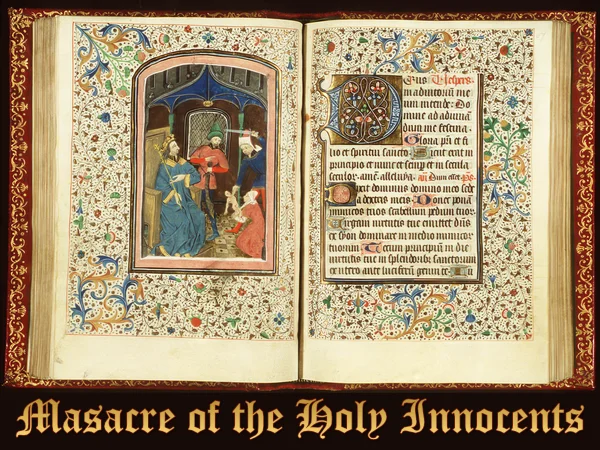
Of all the carols we sing at Christmas, perhaps the most beautiful is also the most poignant. It’s called the Coventry Carol. It’s actually a lament. The lyrics imagine that the carol being sung by the mothers whose children have been murdered in the Massacre of the Holy Innocents. The Gospel today tells us that King Herod gave orders to kill all the boys in Bethlehem and its vicinity who were two years old and under so that he could kill his rival Jesus. The Coventry Carol combines the sound of their weeping mothers with the gentle cadences of a lullaby.
Herod the king, in his raging
Charged he hath this day;
His men of might in his own sight
All young children to slay.
Then woe is me, poor child for thee
And ever mourn and say;
For thy parting, no say nor sing
By by lully lullay
Lullay thou little tiny child,
By, by lully lullay.
King Herod was an exceptionally cruel man. His contribution to Christmas cheer was to have his mother in law executed, and then his wife, perhaps for objecting. He later had his sons executed as well. He was a real family man. The emperor Augustus said of him that, “I would rather be Herod’s dog than his son.” The world into which Christ was born was for the most part controlled by people like Herod. He was not an exception. He was the rule. And people like that are still around today, of course. A book published in 2021 was called, “The Psychopathic CEO: an Executive Survival Guide”.
It’s a strange irony that Christ, who ends His life by dying for others, begins his life with others dying because of Him. The fallen world He was born into is not a safe or easy place. But God accepted a human nature that made him vulnerable to all the trials of our lives. Christ knew what He was doing. As St Paul wrote of Christ in his epistle to the Philippians:
Who, being in the form of God, thought it not robbery to be equal with God:
But made himself of no reputation, and took upon him the form of a servant, and was made in the likeness of men:
And being found in fashion as a man, he humbled himself, and became obedient unto death, even the death of the cross.
King Herod represents all the powers that stand against Christ, what have been called the “lordless powers” that refuse to accept His authority. These powers will kill the Christ Child when He grows up. And these powers are not just outside ourselves; they are within us too.
Perhaps there are parts of our selves that wants nothing to do with Christ, and that jealously guard their independence. There are parts of ourselves that refuse to obey what we know to be His will. The Gospel of St John tells us that the Lord came to what was his own, but his own did not accept him. St John isn’t just talking about Herod. Maybe he’s talking about us too.
Jesus told His disciples, Keep watch! There’s a word in Greek, which is translated as “watchfulness” or “vigilance”: nepsis. Nepsis refers to the guarding of the mind and heart against harmful thoughts, temptations and distractions. It is the heightened state of spiritual alertness and unwavering attentiveness to our thoughts, actions and inner disposition.
If we are watchful, if we practice nepsis, then perhaps we will realise that there are aspects of our own lives and the lives of others are we ready to destroy because of our own refusal of Christ. The story of Herod is meant as a warning to us.
To escape from Herod the Holy Family, Jesus, Mary and Joseph, begin their mission in exile. Jesus begins His life as a refugee and an immigrant in Egypt. As a poet has written:
We think of him as safe beneath the steeple,
Or cosy in a crib beside the font,
But he is with a million displaced people
On the long road of weariness and want.
For even as we sing our final carol
His family is up and on that road,
Fleeing the wrath of someone else’s quarrel,
Glancing behind and shouldering their load.
Whilst Herod rages still from his dark tower
Christ clings to Mary, fingers tightly curled,
The lambs are slaughtered by the men of power,
And [murderers] spread their curse across the world.
But every Herod dies, and comes alone
To stand before the Lamb upon the throne.
Amen.
The Rev’d Dr James Lawson,
St Mary Magdalene Enfield, 28/12/2025
Sep. 27, 2026
Baptism
May. 17, 2026
Ulrich Zwingli and The Sausage

May. 10, 2026
Seeking Fulfilment?

May. 03, 2026
The way, the truth and the life

Apr. 19, 2026
Jesus, Peter and the Path
Apr. 12, 2026
Doubting Thomas?
Mar. 22, 2026
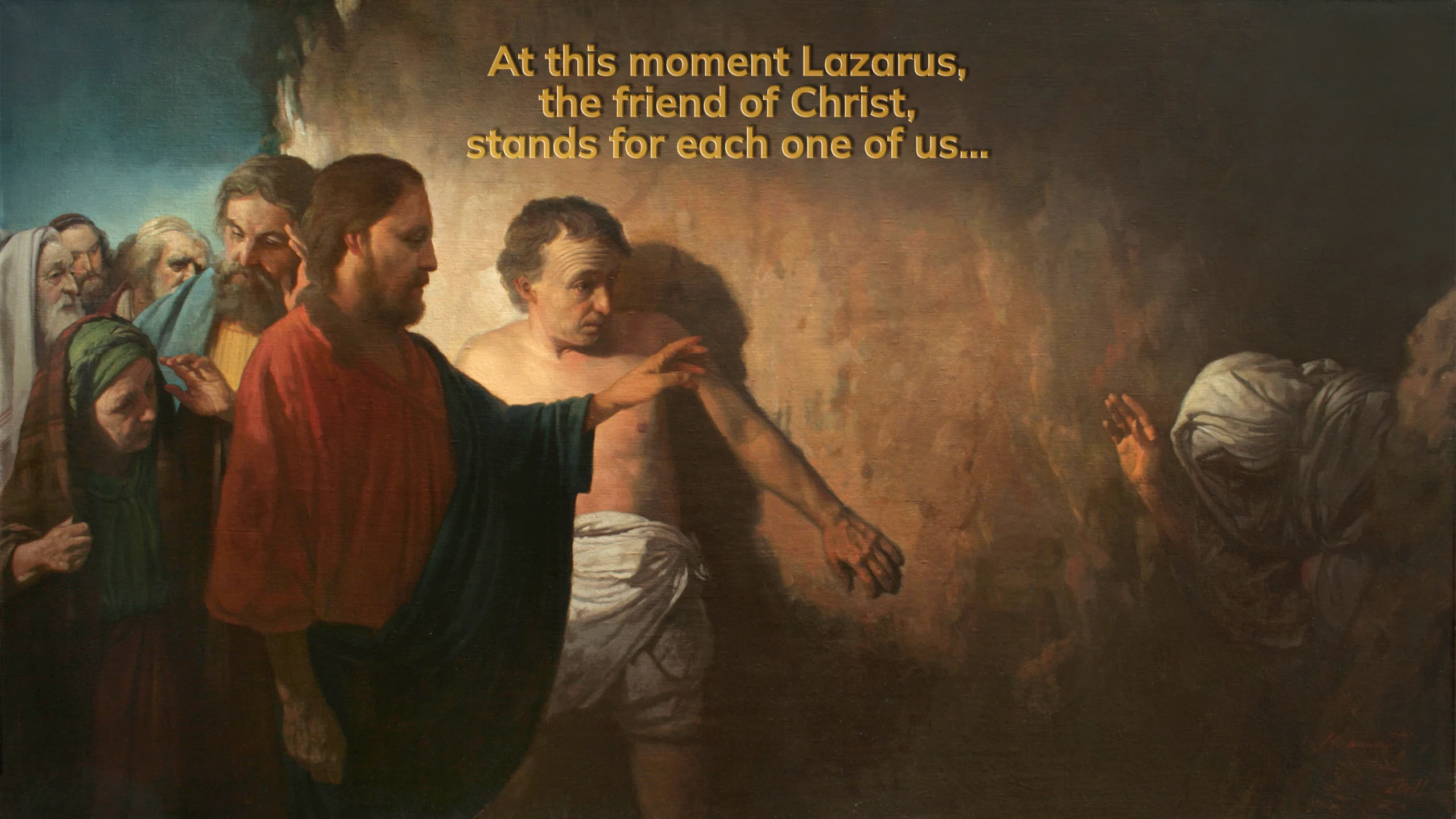
The Resurrection of Lazarus

Feb. 01, 2026
Simeon the Sentry

Jan. 11, 2026
The Suffering Servant

Jan. 04, 2026
The Epiphany
Dec. 28, 2025
Massacre of the Holy Innocents

Dec. 21, 2025
The King’s Arrival
Talks Archive
First Sunday of Christmas 2025
Of all the carols we sing at Christmas, perhaps the most beautiful is also the most poignant. It’s called the Coventry Carol. It’s actually a lament. The lyrics imagine that the carol being sung by the mothers whose children have been murdered in the Massacre of the Holy Innocents. The Gospel today tells us that King Herod gave orders to kill all the boys in Bethlehem and its vicinity who were two years old and under so that he could kill his rival Jesus. The Coventry Carol combines the sound of their weeping mothers with the gentle cadences of a lullaby.
Herod the king, in his raging
Charged he hath this day;
His men of might in his own sight
All young children to slay.
Then woe is me, poor child for thee
And ever mourn and say;
For thy parting, no say nor sing
By by lully lullay
Lullay thou little tiny child,
By, by lully lullay.
King Herod was an exceptionally cruel man. His contribution to Christmas cheer was to have his mother in law executed, and then his wife, perhaps for objecting. He later had his sons executed as well. He was a real family man. The emperor Augustus said of him that, “I would rather be Herod’s dog than his son.” The world into which Christ was born was for the most part controlled by people like Herod. He was not an exception. He was the rule. And people like that are still around today, of course. A book published in 2021 was called, “The Psychopathic CEO: an Executive Survival Guide”.
It’s a strange irony that Christ, who ends His life by dying for others, begins his life with others dying because of Him. The fallen world He was born into is not a safe or easy place. But God accepted a human nature that made him vulnerable to all the trials of our lives. Christ knew what He was doing. As St Paul wrote of Christ in his epistle to the Philippians:
Who, being in the form of God, thought it not robbery to be equal with God:
But made himself of no reputation, and took upon him the form of a servant, and was made in the likeness of men:
And being found in fashion as a man, he humbled himself, and became obedient unto death, even the death of the cross.
King Herod represents all the powers that stand against Christ, what have been called the “lordless powers” that refuse to accept His authority. These powers will kill the Christ Child when He grows up. And these powers are not just outside ourselves; they are within us too.
Perhaps there are parts of our selves that wants nothing to do with Christ, and that jealously guard their independence. There are parts of ourselves that refuse to obey what we know to be His will. The Gospel of St John tells us that the Lord came to what was his own, but his own did not accept him. St John isn’t just talking about Herod. Maybe he’s talking about us too.
Jesus told His disciples, Keep watch! There’s a word in Greek, which is translated as “watchfulness” or “vigilance”: nepsis. Nepsis refers to the guarding of the mind and heart against harmful thoughts, temptations and distractions. It is the heightened state of spiritual alertness and unwavering attentiveness to our thoughts, actions and inner disposition.
If we are watchful, if we practice nepsis, then perhaps we will realise that there are aspects of our own lives and the lives of others are we ready to destroy because of our own refusal of Christ. The story of Herod is meant as a warning to us.
To escape from Herod the Holy Family, Jesus, Mary and Joseph, begin their mission in exile. Jesus begins His life as a refugee and an immigrant in Egypt. As a poet has written:
We think of him as safe beneath the steeple,
Or cosy in a crib beside the font,
But he is with a million displaced people
On the long road of weariness and want.
For even as we sing our final carol
His family is up and on that road,
Fleeing the wrath of someone else’s quarrel,
Glancing behind and shouldering their load.
Whilst Herod rages still from his dark tower
Christ clings to Mary, fingers tightly curled,
The lambs are slaughtered by the men of power,
And [murderers] spread their curse across the world.
But every Herod dies, and comes alone
To stand before the Lamb upon the throne.
Amen.
The Rev’d Dr James Lawson,
St Mary Magdalene Enfield, 28/12/2025


