
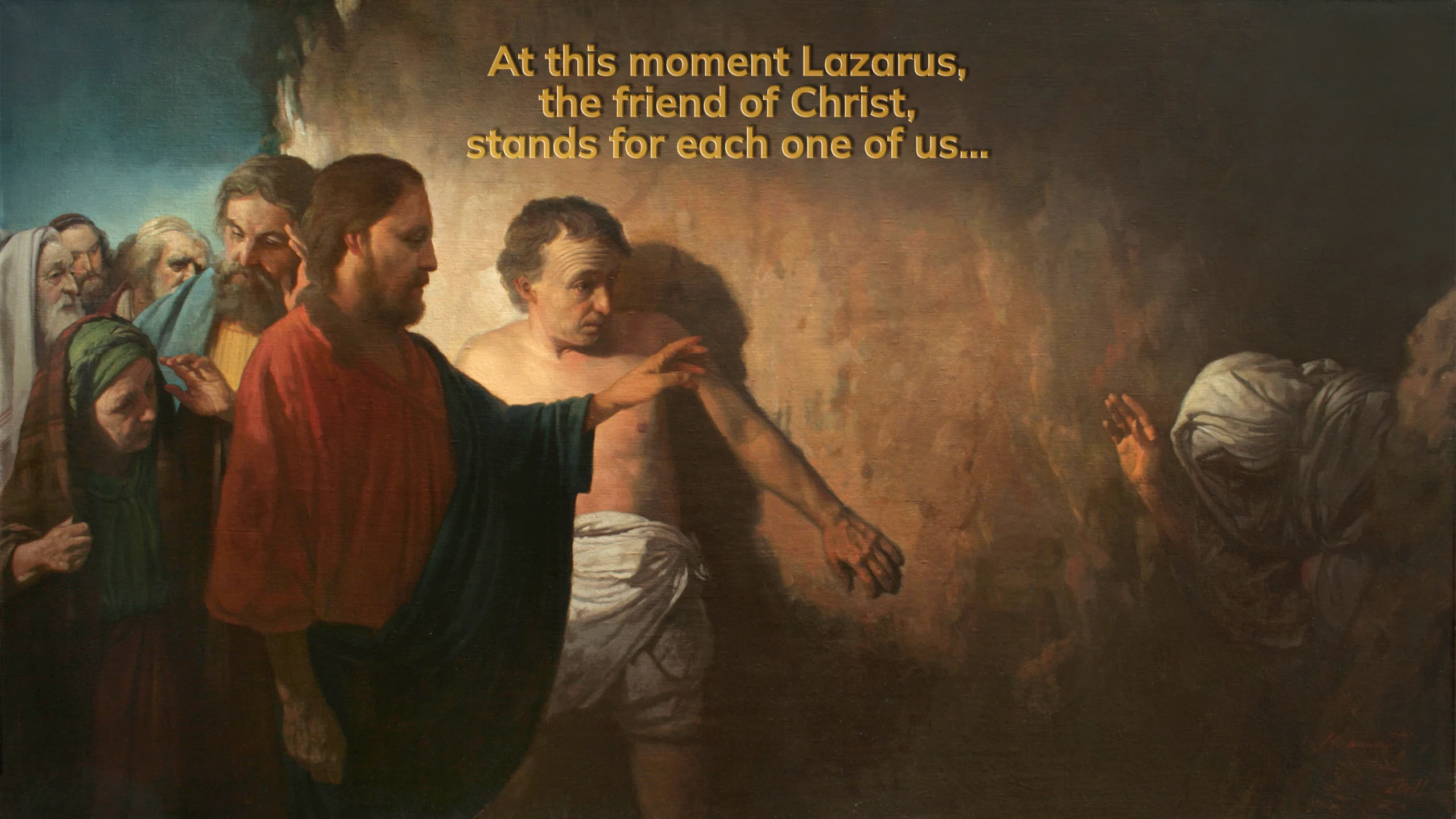
The Resurrection of Lazarus
Read Time: 7 mins
Lent 5 2026
In the Creed we say that “for us men, and for our salvation, [Jesus] came down from heaven, and was incarnate by the Holy Ghost and of the Virgin Mary, and was made man.”
What does it mean that Jesus came down from heaven and was “made man”? Well, there’s a poem by Philip Larkin about a group of young women that says something about what our lives are like. They’re watching their children playing on the swings and in a sandpit in a playground on a council estate. The poet sympathises with these women. He knows that their lives are dominated by looking after their children and by what he calls an “estateful of washing.” They don’t get much support from anyone. Once they were younger and more beautiful. Now they’re getting older. Now, he says, “their beauty has thickened.” They’ve lost the freedom from care that they once had. Their lives are dominated by monotony and stress. Larkin says of them, “Something is pushing them/To the side of their own lives.”
What it meant for Jesus to be “made man” was for Him to enter into the experience of many of us of being pushed to the side of our own lives: our experience of being dominated and disappointed in life, over and over again. We hoped for more from life. Sometimes we experience more, on rare beautiful days: the day we fell in love, the day our child was born, the first day of a holiday. But what do these days mean?
Jesus was dominated and disappointed just like us. There weren’t many visible triumphs in Jesus’s earthly life. He preached a Kingdom not of this world. When He was born there was no room at the inn. For nearly thirty years He lived in obscurity as a manual labourer. When He appeared from Nazareth to begin His public ministry, someone immediately asked: Can anything good come out of Nazareth? In the end He was crucified between two thieves and laid to rest in the tomb of a stranger.
But Jesus did have two beautiful days. He had two days of triumph in His earthly ministry. These days are remembered this Sunday and next Sunday. Today we remember the raising of Lazarus. Next Sunday is Palm Sunday. Together these Sundays form the transition from Lent to Holy Week. They’re the unique and paradoxical days just before the Lord’s Passion. And they are days of visible, earthly triumph, days of resurrection and messianic joy. Christ is at their centre. These days point beyond themselves to His ultimate victory. He will not win this victory just by raising one man from the dead or by entering one particular city. He will win this victory by His passion, death and resurrection.
The Gospel tells us that, six days before His own death, Jesus went to visit the grave of His friend Lazarus at Bethany outside of Jerusalem. He was aware of that Lazarus was just about to die: but He deliberately delayed going to see him. When His disciples told Him that his friend was dead: For your sake I am glad that I was not there, so that you may believe.
So when Jesus arrived at Bethany, Lazarus had already been dead for four days. Jesus has experienced being dominated and disappointed in His earthly life. Now He has to experience being bereaved. He has to encounter the horrible reality of death. God created men and women in His own image and likeness. We are both spiritual and material. We are a unity of soul and body. Death is destruction of that unity. It is the separation of soul and body. The soul without the body is a ghost and the body without the soul is a decaying corpse. St John of Damascus wrote, “I weep and I wail, when I think upon death, and behold our beauty, shaped to be the image of God, lying in the tomb dishonoured, and disfigured, and deprived of form.” But death is our fate now we have turned away from God.
The Gospel records with great simplicity that, when He got to His friend’s grave, Jesus wept. At this moment Lazarus, the friend of Christ, stands for each one of us, and Bethany is the mystical centre of the world. Jesus would weep at our grave too. He wept as He saw His good creation and man, who was made through Him to be filled with joy, life and light, now decaying in a grave. Jesus wept. This is worse than being pushed to the side of our own lives. Our hearts long for more than our lives allow us to experience, except perhaps on rare, beautiful days: our hearts long for joy and life and light. They long for the fullness of life. But is it our destiny to be dominated and disappointed over and over again? Is it our destiny finally to decompose in darkness, despair and death? The Gospel says that the people didn’t want to face this reality. They didn’t want to open the tomb of Lazarus, for they said, by this time there will be an odour, for he has been dead four days.
When the stone was removed from the tomb, Jesus prayed to His Father and then cried with a loud voice: Lazarus, come out. Icons of this scene depict the moment when Lazarus appears at the entrance to the tomb. He is still wrapped in his grave clothes and his friends, who are holding their noses because of the stench of his decaying body, must unwrap him. Imagine the scene. Jesus wants to show you something. On the eve of His own suffering and death He raises a man who has been dead for four days! Why? Jesus wants to show you that disappointment and death are not our ultimate destiny. Jesus says “No!” to our disappointments. Jesus says “No!” to death. Our creator comes to rescue of His creation in Jesus. St Paul wrote in his Epistle to the Romans: For the creation was subjected to futility, not willingly, but because of Him who subjected it in hope. The meaning of the beautiful days we have known is that they are a foretaste of the beautiful day that awaits us. This day will last forever.
People were astonished. Many immediately believed in Jesus. A great crowd began to assemble around Him as the news of the raising of Lazarus spread. His triumphal entry into Jerusalem follows next Sunday.
So let us enter the days of the Passion with the hope. Beyond the disappointments of our lives is ultimate fulfilment. Our destiny is not death but life. Our defeats will be taken up into the victory of God. Let us enter these days of Passiontide with the memory of the beautiful day when Jesus raised Lazarus from the dead. Let us enter Passiontide, and live our negative experiences, with hope and light in our hearts, and joy in the coming resurrection. For as an ancient hymn says: By raising Lazarus from the dead before Thy passion, Thou didst confirm the universal resurrection, O Christ God! Like the children with the branches of victory, we cry out to Thee, O Vanquisher of Death: Hosanna in the highest! Blessed is he that comes in the name of the Lord!
Amen.
The Rev’d Dr James Lawson
St Mary Magdalene Enfield, 22/03/26
Sep. 27, 2026
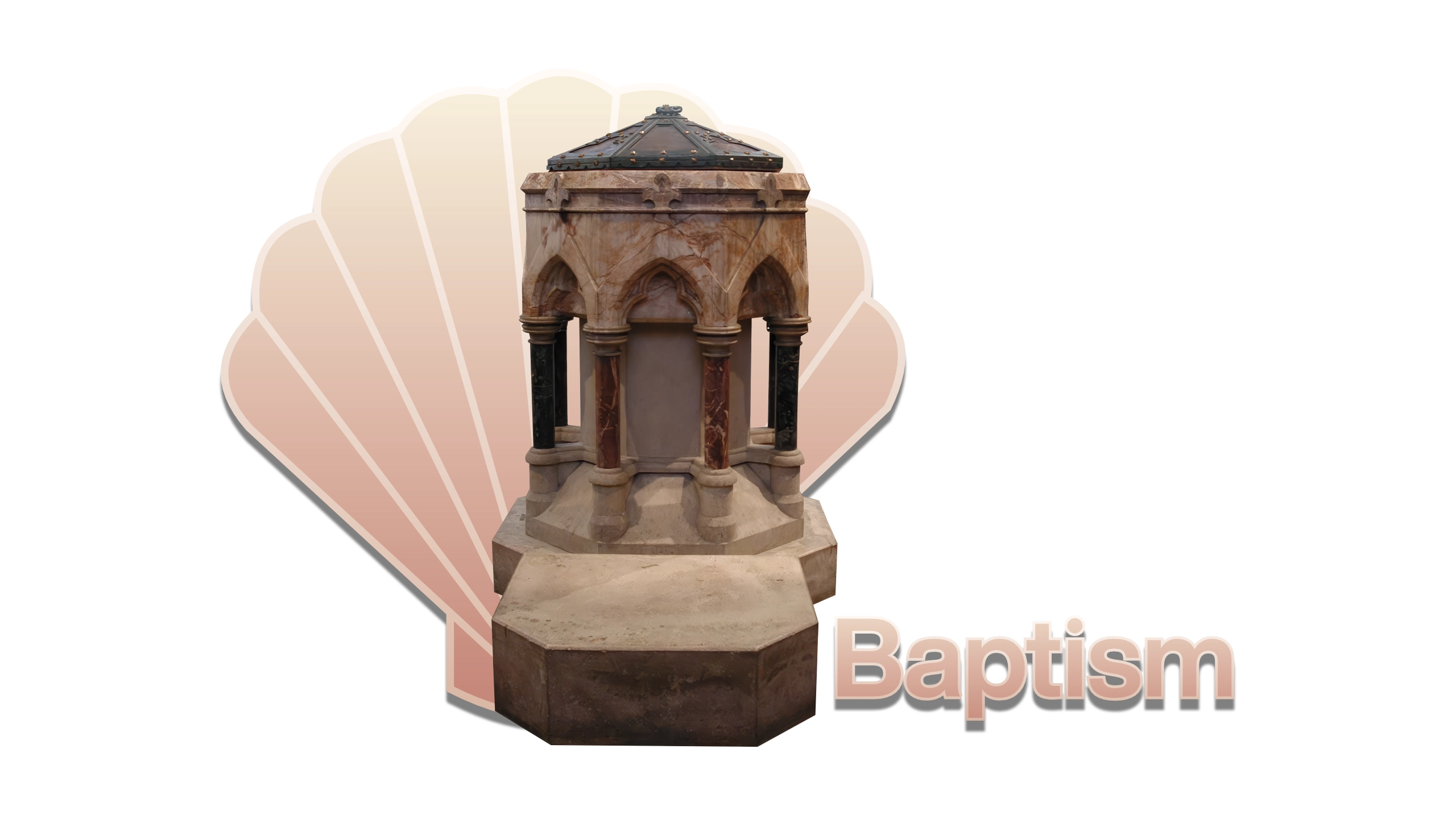
Baptism

May. 17, 2026
Ulrich Zwingli and The Sausage

May. 10, 2026
Seeking Fulfilment?

May. 03, 2026
The way, the truth and the life

Apr. 19, 2026
Jesus, Peter and the Path
Apr. 12, 2026
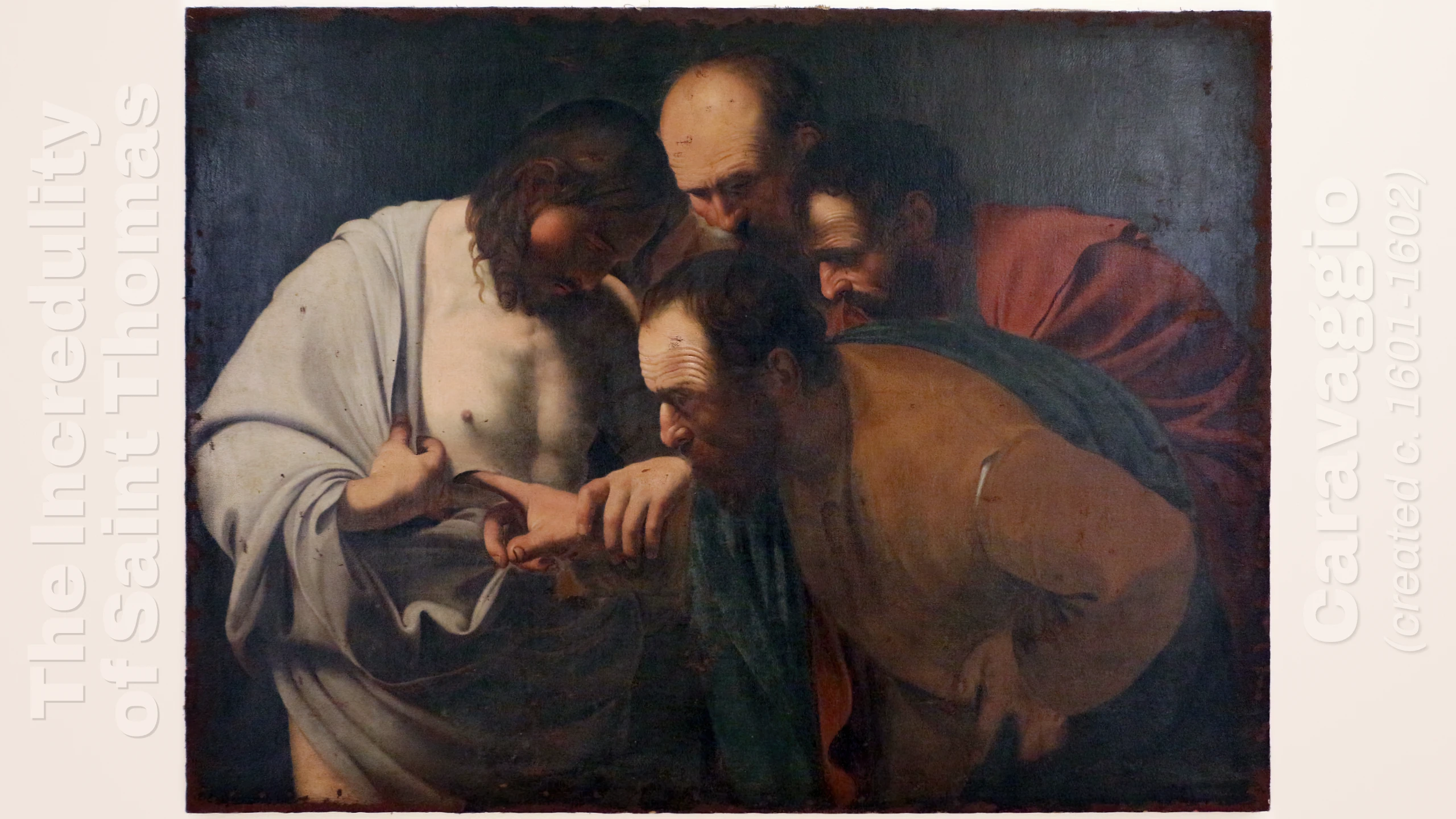
Doubting Thomas?
Mar. 22, 2026
The Resurrection of Lazarus

Feb. 01, 2026
Simeon the Sentry

Jan. 11, 2026
The Suffering Servant

Jan. 04, 2026
The Epiphany

Dec. 28, 2025
Massacre of the Holy Innocents

Dec. 21, 2025
The King’s Arrival
Talks Archive
Lent 5 2026
In the Creed we say that “for us men, and for our salvation, [Jesus] came down from heaven, and was incarnate by the Holy Ghost and of the Virgin Mary, and was made man.”
What does it mean that Jesus came down from heaven and was “made man”? Well, there’s a poem by Philip Larkin about a group of young women that says something about what our lives are like. They’re watching their children playing on the swings and in a sandpit in a playground on a council estate. The poet sympathises with these women. He knows that their lives are dominated by looking after their children and by what he calls an “estateful of washing.” They don’t get much support from anyone. Once they were younger and more beautiful. Now they’re getting older. Now, he says, “their beauty has thickened.” They’ve lost the freedom from care that they once had. Their lives are dominated by monotony and stress. Larkin says of them, “Something is pushing them/To the side of their own lives.”
What it meant for Jesus to be “made man” was for Him to enter into the experience of many of us of being pushed to the side of our own lives: our experience of being dominated and disappointed in life, over and over again. We hoped for more from life. Sometimes we experience more, on rare beautiful days: the day we fell in love, the day our child was born, the first day of a holiday. But what do these days mean?
Jesus was dominated and disappointed just like us. There weren’t many visible triumphs in Jesus’s earthly life. He preached a Kingdom not of this world. When He was born there was no room at the inn. For nearly thirty years He lived in obscurity as a manual labourer. When He appeared from Nazareth to begin His public ministry, someone immediately asked: Can anything good come out of Nazareth? In the end He was crucified between two thieves and laid to rest in the tomb of a stranger.
But Jesus did have two beautiful days. He had two days of triumph in His earthly ministry. These days are remembered this Sunday and next Sunday. Today we remember the raising of Lazarus. Next Sunday is Palm Sunday. Together these Sundays form the transition from Lent to Holy Week. They’re the unique and paradoxical days just before the Lord’s Passion. And they are days of visible, earthly triumph, days of resurrection and messianic joy. Christ is at their centre. These days point beyond themselves to His ultimate victory. He will not win this victory just by raising one man from the dead or by entering one particular city. He will win this victory by His passion, death and resurrection.
The Gospel tells us that, six days before His own death, Jesus went to visit the grave of His friend Lazarus at Bethany outside of Jerusalem. He was aware of that Lazarus was just about to die: but He deliberately delayed going to see him. When His disciples told Him that his friend was dead: For your sake I am glad that I was not there, so that you may believe.
So when Jesus arrived at Bethany, Lazarus had already been dead for four days. Jesus has experienced being dominated and disappointed in His earthly life. Now He has to experience being bereaved. He has to encounter the horrible reality of death. God created men and women in His own image and likeness. We are both spiritual and material. We are a unity of soul and body. Death is destruction of that unity. It is the separation of soul and body. The soul without the body is a ghost and the body without the soul is a decaying corpse. St John of Damascus wrote, “I weep and I wail, when I think upon death, and behold our beauty, shaped to be the image of God, lying in the tomb dishonoured, and disfigured, and deprived of form.” But death is our fate now we have turned away from God.
The Gospel records with great simplicity that, when He got to His friend’s grave, Jesus wept. At this moment Lazarus, the friend of Christ, stands for each one of us, and Bethany is the mystical centre of the world. Jesus would weep at our grave too. He wept as He saw His good creation and man, who was made through Him to be filled with joy, life and light, now decaying in a grave. Jesus wept. This is worse than being pushed to the side of our own lives. Our hearts long for more than our lives allow us to experience, except perhaps on rare, beautiful days: our hearts long for joy and life and light. They long for the fullness of life. But is it our destiny to be dominated and disappointed over and over again? Is it our destiny finally to decompose in darkness, despair and death? The Gospel says that the people didn’t want to face this reality. They didn’t want to open the tomb of Lazarus, for they said, by this time there will be an odour, for he has been dead four days.
When the stone was removed from the tomb, Jesus prayed to His Father and then cried with a loud voice: Lazarus, come out. Icons of this scene depict the moment when Lazarus appears at the entrance to the tomb. He is still wrapped in his grave clothes and his friends, who are holding their noses because of the stench of his decaying body, must unwrap him. Imagine the scene. Jesus wants to show you something. On the eve of His own suffering and death He raises a man who has been dead for four days! Why? Jesus wants to show you that disappointment and death are not our ultimate destiny. Jesus says “No!” to our disappointments. Jesus says “No!” to death. Our creator comes to rescue of His creation in Jesus. St Paul wrote in his Epistle to the Romans: For the creation was subjected to futility, not willingly, but because of Him who subjected it in hope. The meaning of the beautiful days we have known is that they are a foretaste of the beautiful day that awaits us. This day will last forever.
People were astonished. Many immediately believed in Jesus. A great crowd began to assemble around Him as the news of the raising of Lazarus spread. His triumphal entry into Jerusalem follows next Sunday.
So let us enter the days of the Passion with the hope. Beyond the disappointments of our lives is ultimate fulfilment. Our destiny is not death but life. Our defeats will be taken up into the victory of God. Let us enter these days of Passiontide with the memory of the beautiful day when Jesus raised Lazarus from the dead. Let us enter Passiontide, and live our negative experiences, with hope and light in our hearts, and joy in the coming resurrection. For as an ancient hymn says: By raising Lazarus from the dead before Thy passion, Thou didst confirm the universal resurrection, O Christ God! Like the children with the branches of victory, we cry out to Thee, O Vanquisher of Death: Hosanna in the highest! Blessed is he that comes in the name of the Lord!
Amen.
The Rev’d Dr James Lawson
St Mary Magdalene Enfield, 22/03/26


