
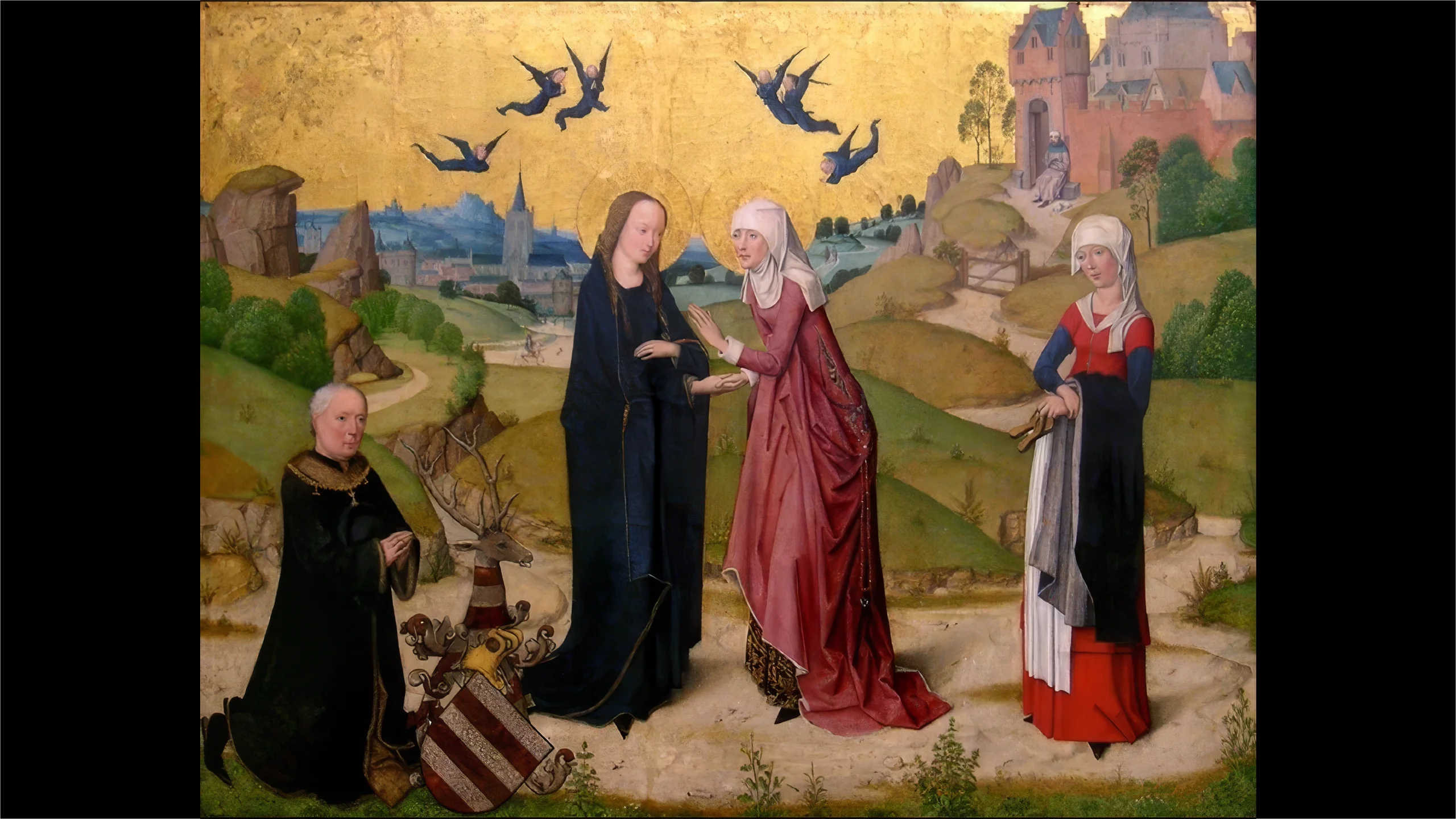
The Visitation
Read Time: 5 mins
December 22nd, The Fourth Sunday of Advent – The Visitation
May I speak in the name of God, Father, Son and Holy Spirit. Amen. A friend of mine described a recent nativity she attended at the local nursery school. She said: “The angel marched in with baby dangling by its feet, announced loudly and clearly, ‘You have a baby boy and it’s called Jesus’, and then literally threw it at Mary. And Mary didn’t want to hold it so threw it in the manger.”
I would suggest that this is a wrong attitude to Christmas for us to follow. This shows a lack of respect. We can get so used to the story that we treat the infant Jesus with over-familiarity. We lose for want of a better word, the tingly magic that comes from the story of the nativity, that excitement of Christmas that children instinctively feel, and that we sometimes lose.
James’ sermon last week reminded us how the good news of Christ’s arrival should affect us in the same way when Lucy in the Lion, the Witch and Wardrobe is told that essentially Christ is coming, and the grip of evil and death is even now starting to be reversed. The winter of this world is coming to an end. And Lucy felt running through her that deep shiver of gladness which you only get if you are being solemn and still.
In our reading today we enter the mystery of the encounter between Mary and her cousin Elizabeth, one pregnant with the Messiah, the Saviour of the World; the other pregnant with his messenger, John the future Baptist. The meeting of Mary and Elizabeth is a story, a moment in time and history so full of mystery and wonder that we can only really tip-toe as we approach it. We cannot fathom the full measure of its meaning or indeed Mary and Elizabeth’s feelings. I sort of feel we can only really stand and watch the scene at a slight distance. Maybe.
You will remember that just before the archangel Gabriel has announced to Mary that she will bear a son, the Son of God, and her cousin Elizabeth has also conceived and is now 6 months’ pregnant despite being far too old usually to have children.
This visit to Elizabeth was Mary’s response to the archangel’s words and to Gabriel’s silent invitation to go and visit Elizabeth, to support her in her pregnancy, but also to learn from her the things that have come to pass foretelling the joyous birth of John, the forerunner of the Lord.
Gabriel had said that John would fulfil the prophecies of Malachi and Isaiah, and would prepare the people for the arrival of the Lord. And so when Elizabeth greets Mary, for the first time, in some fashion not yet made plain, the mother of God is greeted on earth as the mother of the Lord.
And here we encounter true mystery, and sacred moments in time. That deep shiver of gladness which you only get if you are being solemn and still. For John the forerunner’s spirit, illuminated by the Holy Spirit, knew the Saviour even in his mother’s womb, and rejoiced in His approach with God-given joy. And even before his birth the forerunner bears witness to the coming Saviour. O God help us to feel the power and significance of this leaping in the womb, this sign of the presence of God filling their lives and the ultimately the world.
What must Mary have felt—the growing joy and reassurance that God is with her, and is doing great things through her for the world.
We can learn so much from Mary’s faith, from her trust in God. When she agrees to be the mother of the Saviour, she does so trusting that God will bring this about even though she knows not a man. She trust so strongly, and her own inclination is so naturally towards quiet reserve, that she would prefer to leave the issue with regard to Joseph in God’s hands. And in Elizabeth’s greeting, in the song of Elizabeth, she says “Blessed is she who believed that there would be a fulfilment of what was spoken to her by the Lord.”
May Mary’s depth of faith inspire us to focus wholeheartedly on Christ and trust in God. May we believe what was spoken to her by the Lord.
And as we get nearer Christmas may we approach the manger with humility, with reverence and awe, and thank God with growing joy and excitement for a child born 2,000 years ago, and alive in our hearts now.
Amen.
The Rev’d Michael Aylmer, St Mary Magdalene Enfield, 22/12/2024
Sep. 27, 2026
Baptism
May. 17, 2026
Ulrich Zwingli and The Sausage

May. 10, 2026
Seeking Fulfilment?

May. 03, 2026
The way, the truth and the life

Apr. 19, 2026
Jesus, Peter and the Path
Apr. 12, 2026
Doubting Thomas?
Mar. 22, 2026
The Resurrection of Lazarus

Feb. 01, 2026
Simeon the Sentry

Jan. 11, 2026
The Suffering Servant

Jan. 04, 2026
The Epiphany

Dec. 28, 2025
Massacre of the Holy Innocents

Dec. 21, 2025
The King’s Arrival
Talks Archive
December 22nd, The Fourth Sunday of Advent – The Visitation
May I speak in the name of God, Father, Son and Holy Spirit. Amen. A friend of mine described a recent nativity she attended at the local nursery school. She said: “The angel marched in with baby dangling by its feet, announced loudly and clearly, ‘You have a baby boy and it’s called Jesus’, and then literally threw it at Mary. And Mary didn’t want to hold it so threw it in the manger.”
I would suggest that this is a wrong attitude to Christmas for us to follow. This shows a lack of respect. We can get so used to the story that we treat the infant Jesus with over-familiarity. We lose for want of a better word, the tingly magic that comes from the story of the nativity, that excitement of Christmas that children instinctively feel, and that we sometimes lose.
James’ sermon last week reminded us how the good news of Christ’s arrival should affect us in the same way when Lucy in the Lion, the Witch and Wardrobe is told that essentially Christ is coming, and the grip of evil and death is even now starting to be reversed. The winter of this world is coming to an end. And Lucy felt running through her that deep shiver of gladness which you only get if you are being solemn and still.
In our reading today we enter the mystery of the encounter between Mary and her cousin Elizabeth, one pregnant with the Messiah, the Saviour of the World; the other pregnant with his messenger, John the future Baptist. The meeting of Mary and Elizabeth is a story, a moment in time and history so full of mystery and wonder that we can only really tip-toe as we approach it. We cannot fathom the full measure of its meaning or indeed Mary and Elizabeth’s feelings. I sort of feel we can only really stand and watch the scene at a slight distance. Maybe.
You will remember that just before the archangel Gabriel has announced to Mary that she will bear a son, the Son of God, and her cousin Elizabeth has also conceived and is now 6 months’ pregnant despite being far too old usually to have children.
This visit to Elizabeth was Mary’s response to the archangel’s words and to Gabriel’s silent invitation to go and visit Elizabeth, to support her in her pregnancy, but also to learn from her the things that have come to pass foretelling the joyous birth of John, the forerunner of the Lord.
Gabriel had said that John would fulfil the prophecies of Malachi and Isaiah, and would prepare the people for the arrival of the Lord. And so when Elizabeth greets Mary, for the first time, in some fashion not yet made plain, the mother of God is greeted on earth as the mother of the Lord.
And here we encounter true mystery, and sacred moments in time. That deep shiver of gladness which you only get if you are being solemn and still. For John the forerunner’s spirit, illuminated by the Holy Spirit, knew the Saviour even in his mother’s womb, and rejoiced in His approach with God-given joy. And even before his birth the forerunner bears witness to the coming Saviour. O God help us to feel the power and significance of this leaping in the womb, this sign of the presence of God filling their lives and the ultimately the world.
What must Mary have felt—the growing joy and reassurance that God is with her, and is doing great things through her for the world.
We can learn so much from Mary’s faith, from her trust in God. When she agrees to be the mother of the Saviour, she does so trusting that God will bring this about even though she knows not a man. She trust so strongly, and her own inclination is so naturally towards quiet reserve, that she would prefer to leave the issue with regard to Joseph in God’s hands. And in Elizabeth’s greeting, in the song of Elizabeth, she says “Blessed is she who believed that there would be a fulfilment of what was spoken to her by the Lord.”
May Mary’s depth of faith inspire us to focus wholeheartedly on Christ and trust in God. May we believe what was spoken to her by the Lord.
And as we get nearer Christmas may we approach the manger with humility, with reverence and awe, and thank God with growing joy and excitement for a child born 2,000 years ago, and alive in our hearts now.
Amen.
The Rev’d Michael Aylmer, St Mary Magdalene Enfield, 22/12/2024


