

The Good Samaritan
Read Time: 5 mins
May I speak in the name of God, Father, Son and Holy Spirit. Amen.
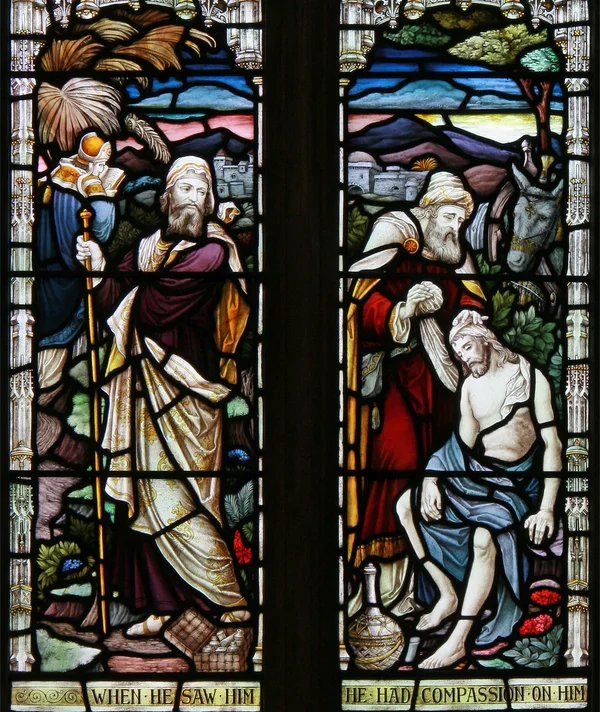
The parable of the Good Samaritan has to be one of the most famous and most commented on parables of all time. Maybe only the lost sheep rivals it. And one of the most famous commentators on the Good Samaritan was Martin Luther King Jr, who commented on the parable throughout his preaching career. Martin Luther King like to take Jesus’ scenario and think about it in different ways. Where for example, he asked, were the priest and levite going? Maybe they had something very important and HAD to be somewhere and were already running late. We’ve all been there.
Maybe the Levite was on his way to Jerico for an important job dealing with violent crime in the area; perhaps the priest was en route to Jerusalem to serve on the Government’s Committee for the Improvement of Public Highways. I mean, things are clearly pretty bad with crime on the roads as they’d even passed a man who looked injured and half dead as they were passing.
King also pointed out that the Samaritan maybe wasn’t so good. After all, the Samaritan didn’t exactly let the authorities know what had happened – he didn’t try to get the police to arrest the robbers! Is he maybe only the Quite Good Samaritan.
Now the joy of the parables is they have so much depth and meaning to them, and God can teach us many different messages through them. But they also tend to have one main meaning which they point towards. And Martin Luther King points out, that however much fun we may have with the parable, the main point is that we tend to fail to see people as fellow human beings made out of the same basic stuff as we are, moulded by the same divine image. The Priest and the Levite saw only a bleeding body, not a human being made in their own likeness. “Who is my neighbour?” asks the lawyer. “He is any one lying needy on one of the numerous Jerico roads of life.” We are answerable to the judgement seat of God for every person we ignore.
But the parable goes even deeper. It doesn’t just say that anyone needy is your neighbour; but rather that the Samaritan, or (we might say) the Muslim is your neighbour. Jesus transformed the question, “Who is my neighbour?” into the question, “What does it look like for you to be a neighbour?” And the answer was that being a neighbour looks like the Samaritan, looks like the non-Christian, showing mercy to a perfect stranger and sacrificing his own resources to do it.
And to add insult to injury, Jesus ended the parable by saying to the lawyer, “Go and do likewise.” Go and emulate the Samaritan, or we might say, Go and emulate the non-believer, the athiest, the Muslim –go and emulate the one who was merciful even though he isn’t a believer. That is a quite extraordinary thing for God to say.
Jeremiah 22:16 says: “ ‘He gave justice and help to the poor and needy, and everything went well for him. Isn’t that what it means to know me?’ says the LORD.”
St Teresa of Avila said: “What are good works without a connection to the goodness of Christ?”
Mercy is such an essential attribute of God that in showing mercy and being moved with compassion for our neighbour, we know God, we actually have a connection to the goodness of Christ, even without realising it.
In showing mercy and being moved with compassion for our neighbour we draw near to God, and God draws near to us.
Note that the Samaritan gave 2 danarii, when in terms of board and lodging, a day’s board at the inn would be only about one-twelfth of a denarius.
The Samaritan also bandaged the man’s wounds. It seems unlikely that the Samaritan would happen to be travelling with some spare bandage – commentators say he probably would have used his own head-cloth as a bandage.
That’s the Samaritan in a story. But how much greater is the mercy of God?
We commemorate and celebrate every Sunday the unfathomable, unbelievable depth of the mercy of God, who in Jesus Christ was tortured and died for us, for you, who took our place to free us from the power of sin, the world and the devil.
“The one who showed us mercy…”
Jesus said, “Go and do likewise.”
May it be so.
Amen
The Rev’d Michael Aylmer,
St Mary Magdalene Enfield, 13/07/2025

Sep. 27, 2026
Baptism

May. 17, 2026
Ulrich Zwingli and The Sausage

May. 10, 2026
Seeking Fulfilment?

May. 03, 2026
The way, the truth and the life

Apr. 19, 2026
Jesus, Peter and the Path
Apr. 12, 2026
Doubting Thomas?
Mar. 22, 2026
The Resurrection of Lazarus

Feb. 01, 2026
Simeon the Sentry

Jan. 11, 2026
The Suffering Servant

Jan. 04, 2026
The Epiphany

Dec. 28, 2025
Massacre of the Holy Innocents

Dec. 21, 2025
The King’s Arrival
Talks Archive
May I speak in the name of God, Father, Son and Holy Spirit. Amen.
The parable of the Good Samaritan has to be one of the most famous and most commented on parables of all time. Maybe only the lost sheep rivals it. And one of the most famous commentators on the Good Samaritan was Martin Luther King Jr, who commented on the parable throughout his preaching career. Martin Luther King like to take Jesus’ scenario and think about it in different ways. Where for example, he asked, were the priest and levite going? Maybe they had something very important and HAD to be somewhere and were already running late. We’ve all been there.
Maybe the Levite was on his way to Jerico for an important job dealing with violent crime in the area; perhaps the priest was en route to Jerusalem to serve on the Government’s Committee for the Improvement of Public Highways. I mean, things are clearly pretty bad with crime on the roads as they’d even passed a man who looked injured and half dead as they were passing.
King also pointed out that the Samaritan maybe wasn’t so good. After all, the Samaritan didn’t exactly let the authorities know what had happened – he didn’t try to get the police to arrest the robbers! Is he maybe only the Quite Good Samaritan.
Now the joy of the parables is they have so much depth and meaning to them, and God can teach us many different messages through them. But they also tend to have one main meaning which they point towards. And Martin Luther King points out, that however much fun we may have with the parable, the main point is that we tend to fail to see people as fellow human beings made out of the same basic stuff as we are, moulded by the same divine image. The Priest and the Levite saw only a bleeding body, not a human being made in their own likeness. “Who is my neighbour?” asks the lawyer. “He is any one lying needy on one of the numerous Jerico roads of life.” We are answerable to the judgement seat of God for every person we ignore.
But the parable goes even deeper. It doesn’t just say that anyone needy is your neighbour; but rather that the Samaritan, or (we might say) the Muslim is your neighbour. Jesus transformed the question, “Who is my neighbour?” into the question, “What does it look like for you to be a neighbour?” And the answer was that being a neighbour looks like the Samaritan, looks like the non-Christian, showing mercy to a perfect stranger and sacrificing his own resources to do it.
And to add insult to injury, Jesus ended the parable by saying to the lawyer, “Go and do likewise.” Go and emulate the Samaritan, or we might say, Go and emulate the non-believer, the athiest, the Muslim –go and emulate the one who was merciful even though he isn’t a believer. That is a quite extraordinary thing for God to say.
Jeremiah 22:16 says: “ ‘He gave justice and help to the poor and needy, and everything went well for him. Isn’t that what it means to know me?’ says the LORD.”
St Teresa of Avila said: “What are good works without a connection to the goodness of Christ?”
Mercy is such an essential attribute of God that in showing mercy and being moved with compassion for our neighbour, we know God, we actually have a connection to the goodness of Christ, even without realising it.
In showing mercy and being moved with compassion for our neighbour we draw near to God, and God draws near to us.
Note that the Samaritan gave 2 danarii, when in terms of board and lodging, a day’s board at the inn would be only about one-twelfth of a denarius.
The Samaritan also bandaged the man’s wounds. It seems unlikely that the Samaritan would happen to be travelling with some spare bandage – commentators say he probably would have used his own head-cloth as a bandage.
That’s the Samaritan in a story. But how much greater is the mercy of God?
We commemorate and celebrate every Sunday the unfathomable, unbelievable depth of the mercy of God, who in Jesus Christ was tortured and died for us, for you, who took our place to free us from the power of sin, the world and the devil.
“The one who showed us mercy…”
Jesus said, “Go and do likewise.”
May it be so.
Amen
The Rev’d Michael Aylmer,
St Mary Magdalene Enfield, 13/07/2025


