

Bubble of bubbles, all is bubbles
Read Time: 7 mins
Trinity 7 2025
Our readings today tell us a truth about the world that it’s hard to take in. But maybe it’s a truth that you’ve already learnt from your experience. I think that its a truth that older people have an easier time understanding that young people, especially if they’ve know bereavement.
Here it is. Nothing in this world lasts. Everything in this world eventually fades away. Everything turns to dust. Everything that we have here below we only have temporarily. As the Psalmist says: Our life is over like a sigh. He also says: It’s like the grass that flowers in the morning but by evening it withers and fades.
So listen to what St Paul tells us in our second reading, from his letter to the Colossians. Since, then, you have been raised with Christ, set your hearts on things above, where Christ is, seated at the right hand of God. Set your minds on things above, not on earthly things. Things here below are passing, insubstantial, fleeting. Hence our attention should not be on this world but upon what is above. Our attention should be on things that participate in the eternity of God. So St Paul goes on: Put to death, therefore, whatever belongs to your earthly nature: sexual immorality, impurity, lust, evil desires and greed, which is idolatry: The greed that is idolatry. That’s a wonderful line. I invite you to spend time this week meditating on that line. What does it mean? What does it tell you about the world we live in? St Paul tells us to put to death the desires of our earthly natures. Why? All these desires come from a preoccupation with the goods of this world. Think about it. Where does all the crime and violence that we see in the news come from? Doesn’t it all come from preoccupation with wealth, pleasure and power? Doesn’t it come from greed for the passing goods of the world here below? Whether it’s the theft of the mobile phone of a teenage on the way home from school or the corruption of our politicians or business men and women, or even wars between nations what have you got here in the end but a preoccupation with the fleeting things of this world? What have you got but an expression of the evil desires that lead to idolatry? Idolatry means the worship of something less than God. That’s where our trouble comes from.
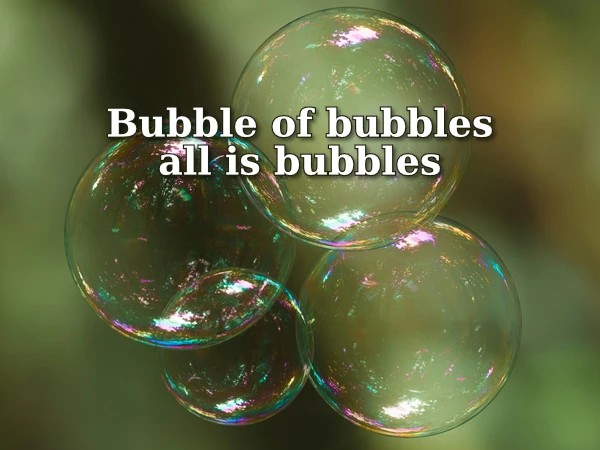
And our Gospel reading is Jesus’ great parable of the rich man who doesn’t have space enough to store his all harvest. He builds more barns. What would be the equivalent today? Someone who makes even better investments or builds an even bigger business? Is it someone with a big house and a big car? Someone whose pension is even bigger than his or her final salary? This person’s wealth makes him complacent. He says to himself: You have plenty of grain laid up for many years. Take life easy; eat, drink and be merry. But that very night he dies and he leaves all of his wealth behind. He spent his whole life working to get rich, but in a single moment, all his work is for nothing. As the author called Qoheleth, which means the Preacher in Hebrew, who wrote the Book called Ecclesiastes says hevel havalim, hakol havel. Vanity of vanities, all is vanity. It’s great and enticing and alluring. And then, like that it’s gone. One of the meanings of the Hebrew word hevel “vanities” is the word “bubble”. We can see a soap bubble float up in the air. It rises and we are fascinated by it’s shininess and gleam. We follow it as it floats through the air. As we focus in on it, pop! It disappears. There is nothing left.
Jesus says: This is how it will be with whoever stores up things for themselves but is not rich toward God. It’s exactly what St Paul says. Don’t focus the attention of your heart on the things of this world but rather on the things of God. Does what you are attending to matter to God? Is it even relevant to your relationship to God?
Long ago St Augustine described how God made everything out of nothing. When He made the world He didn’t make it out of something that pre-existed His Creation. And St Augustine says, everything that is is still shadowed by the nothingness from which it was made. Whatever you have, career, family, love, possessions, success, even if you’re sitting right at the top of the wheel of fortune, all these things are destined to pass back into the nothingness from which they came. Everything carries the shadow of nonbeing. Where is the last holiday that you enjoyed, or the last sunset you watched? Well, it’s gone, like a bubble. Maybe life is like a bubble, or like a wonderful firework. However beautiful it is, we can’t make it stay there in the sky: hevel havalim, hakol havel. Bubble of bubbles, all is bubbles.
Now, I’m not trying to depress you here. What I’m trying to do is what Qoheleth, and St Paul and Jesus are doing, which is to direct your attention to the things that are above, to the eternity of God. That way we can see the good and the true and the beautiful things of this world in proper perspective. Here’s the thing. Once we see the things of this world in the light of God we can learn to love the things of this world without clinging to them, without expecting too much of them. Think how much disappointment and heartache we could avoid if we only learned this truth. Vanity of vanities, all is vanity is ultimately a liberating message. All of life is like a wonderful firework, like a bubble. This is a liberating message because now we don’t have to cling to things or expect total satisfaction from them. We can look above, to the things of God.
I had the privilege of knowing someone who knew C. S. Lewis who was perhaps the most influential English Christian of the twentieth century. He told me something that C S Lewis said to him, close to the end of Lewis’ life. They were both fellows of Magdalene College Cambridge at the time and went going for a walk together along what are called the Backs along the river Cam behind Kings College. It was a beautiful day but summer was drawing to a close. The sun had lost its warmth. There were signs that autumn was coming. My friend noticed this and quoted a line of poetry, “Look thy last on all things lovely, Every hour.” “No, No” said C S Lewis, “Look, thy first on all things lovely.” This is how a Christians sees the world the world in the light of God and in the light of our eternal destiny. As St Augustine wrote:
All shall be Amen and Alleluia.
We shall rest and we shall see.
We shall see and we shall know.
We shall know and we shall love.
We shall love and we shall praise.
Behold our end, which is no end.
Amen.
The Rev’d Dr James Lawson,
St Mary Magdalene Enfield, 03/08/2025
Sep. 27, 2026
Baptism
May. 17, 2026
Ulrich Zwingli and The Sausage

May. 10, 2026
Seeking Fulfilment?

May. 03, 2026
The way, the truth and the life

Apr. 19, 2026
Jesus, Peter and the Path
Apr. 12, 2026
Doubting Thomas?
Mar. 22, 2026
The Resurrection of Lazarus

Feb. 01, 2026
Simeon the Sentry

Jan. 11, 2026
The Suffering Servant

Jan. 04, 2026
The Epiphany

Dec. 28, 2025
Massacre of the Holy Innocents

Dec. 21, 2025
The King’s Arrival
Talks Archive
Trinity 7 2025
Our readings today tell us a truth about the world that it’s hard to take in. But maybe it’s a truth that you’ve already learnt from your experience. I think that its a truth that older people have an easier time understanding that young people, especially if they’ve know bereavement.
Here it is. Nothing in this world lasts. Everything in this world eventually fades away. Everything turns to dust. Everything that we have here below we only have temporarily. As the Psalmist says: Our life is over like a sigh. He also says: It’s like the grass that flowers in the morning but by evening it withers and fades.
So listen to what St Paul tells us in our second reading, from his letter to the Colossians. Since, then, you have been raised with Christ, set your hearts on things above, where Christ is, seated at the right hand of God. Set your minds on things above, not on earthly things. Things here below are passing, insubstantial, fleeting. Hence our attention should not be on this world but upon what is above. Our attention should be on things that participate in the eternity of God. So St Paul goes on: Put to death, therefore, whatever belongs to your earthly nature: sexual immorality, impurity, lust, evil desires and greed, which is idolatry: The greed that is idolatry. That’s a wonderful line. I invite you to spend time this week meditating on that line. What does it mean? What does it tell you about the world we live in? St Paul tells us to put to death the desires of our earthly natures. Why? All these desires come from a preoccupation with the goods of this world. Think about it. Where does all the crime and violence that we see in the news come from? Doesn’t it all come from preoccupation with wealth, pleasure and power? Doesn’t it come from greed for the passing goods of the world here below? Whether it’s the theft of the mobile phone of a teenage on the way home from school or the corruption of our politicians or business men and women, or even wars between nations what have you got here in the end but a preoccupation with the fleeting things of this world? What have you got but an expression of the evil desires that lead to idolatry? Idolatry means the worship of something less than God. That’s where our trouble comes from.
And our Gospel reading is Jesus’ great parable of the rich man who doesn’t have space enough to store his all harvest. He builds more barns. What would be the equivalent today? Someone who makes even better investments or builds an even bigger business? Is it someone with a big house and a big car? Someone whose pension is even bigger than his or her final salary? This person’s wealth makes him complacent. He says to himself: You have plenty of grain laid up for many years. Take life easy; eat, drink and be merry. But that very night he dies and he leaves all of his wealth behind. He spent his whole life working to get rich, but in a single moment, all his work is for nothing. As the author called Qoheleth, which means the Preacher in Hebrew, who wrote the Book called Ecclesiastes says hevel havalim, hakol havel. Vanity of vanities, all is vanity. It’s great and enticing and alluring. And then, like that it’s gone. One of the meanings of the Hebrew word hevel “vanities” is the word “bubble”. We can see a soap bubble float up in the air. It rises and we are fascinated by it’s shininess and gleam. We follow it as it floats through the air. As we focus in on it, pop! It disappears. There is nothing left.
Jesus says: This is how it will be with whoever stores up things for themselves but is not rich toward God. It’s exactly what St Paul says. Don’t focus the attention of your heart on the things of this world but rather on the things of God. Does what you are attending to matter to God? Is it even relevant to your relationship to God?
Long ago St Augustine described how God made everything out of nothing. When He made the world He didn’t make it out of something that pre-existed His Creation. And St Augustine says, everything that is is still shadowed by the nothingness from which it was made. Whatever you have, career, family, love, possessions, success, even if you’re sitting right at the top of the wheel of fortune, all these things are destined to pass back into the nothingness from which they came. Everything carries the shadow of nonbeing. Where is the last holiday that you enjoyed, or the last sunset you watched? Well, it’s gone, like a bubble. Maybe life is like a bubble, or like a wonderful firework. However beautiful it is, we can’t make it stay there in the sky: hevel havalim, hakol havel. Bubble of bubbles, all is bubbles.
Now, I’m not trying to depress you here. What I’m trying to do is what Qoheleth, and St Paul and Jesus are doing, which is to direct your attention to the things that are above, to the eternity of God. That way we can see the good and the true and the beautiful things of this world in proper perspective. Here’s the thing. Once we see the things of this world in the light of God we can learn to love the things of this world without clinging to them, without expecting too much of them. Think how much disappointment and heartache we could avoid if we only learned this truth. Vanity of vanities, all is vanity is ultimately a liberating message. All of life is like a wonderful firework, like a bubble. This is a liberating message because now we don’t have to cling to things or expect total satisfaction from them. We can look above, to the things of God.
I had the privilege of knowing someone who knew C. S. Lewis who was perhaps the most influential English Christian of the twentieth century. He told me something that C S Lewis said to him, close to the end of Lewis’ life. They were both fellows of Magdalene College Cambridge at the time and went going for a walk together along what are called the Backs along the river Cam behind Kings College. It was a beautiful day but summer was drawing to a close. The sun had lost its warmth. There were signs that autumn was coming. My friend noticed this and quoted a line of poetry, “Look thy last on all things lovely, Every hour.” “No, No” said C S Lewis, “Look, thy first on all things lovely.” This is how a Christians sees the world the world in the light of God and in the light of our eternal destiny. As St Augustine wrote:
All shall be Amen and Alleluia.
We shall rest and we shall see.
We shall see and we shall know.
We shall know and we shall love.
We shall love and we shall praise.
Behold our end, which is no end.
Amen.
The Rev’d Dr James Lawson,
St Mary Magdalene Enfield, 03/08/2025


