

Fire and Judgement
Read Time: 7 mins

I have come to bring fire on the earth, and how I wish it were already kindled!
This line tells us so much about Jesus, and His mission. A lot of sermons seem to want to play down the fiercer and more challenging aspects of Revelation. They present a God who is always kind, gentle, inclusive and compassionate. But, there’s more to God than this in the Bible if you read it for yourself. The God of the New Testament as well as the Old Testament is indeed kind, gentle, inclusive and compassionate. But He is also fierce, demanding, frightening and judgmental. Now being judgmental is totally unacceptable in our culture. In a permissive society you can do whatever you want – as long as it’s consensual – but the one thing you just cannot do is be judgmental. But I’m afraid that in the Bible God is extremely judgmental. In our Gospel today Jesus is even frightening. He incarnates this judgmental God of the Bible. When He says that He has come to bring fire on the earth the word in the Greek is ballein, which means “to throw”. He has come throw fire! He’s not here to light a gentle, warm, cosy fire for us in our fireplace. He has come to throw fire on the earth! He is the incarnation of the God who sent fire to destroy the cities of Sodom and Gomorrah, and sent fire to consume the enemies of the Prophet Elijah. So Jesus continues Do you think I came to bring peace on earth? No, I tell you, but division.From now on there will be five in one family divided against each other, three against two and two against three. This is Jesus talking, the One who has come to throw fire on the earth.
You might say, “Isn’t He supposed to be the Prince of Peace? Isn’t that what the angels called Him on the first Christmas morning?” Well, here He is bringing not peace but a sword. “I’ve come for division!” He says. “I’ve come to even divide households and families, to set you against your own mother or your brother.”
Jesus seems to be harsh and dreadful sometimes. But isn’t He supposed to be meek and mild? Which is it then? Surely He can’t both? He can’t be harsh and mild?
But then what does God’s love look like in the context of a world that’s gone wrong? Love is what God gives. That is all He gives. Love is what God is. God is love. It’s as simple as that. He never changes. But, but, how we perceive that love does change. That love is perceived by our fallen minds. And whatever is received is received according to the mode, the capacity of the recipient. So I could recite Shakespeare to my three year old but she wouldn’t be able to take it in yet. She couldn’t receive it. It would just be gobbledygook to her. In the same way the sun always shines, but on a cold and cloudy day we can’t receive all its light and warmth. In the same way, we can’t receive the love of God when the cloud of sin covers our sky. And then that love can appear to be fierce, demanding, frightening and judgmental to our fallen minds.
Or if we’re in a bad mood, we may not mind having someone around who is also in a bad mood, or someone who also has a hangover. The person who would be really aggravating to have around is someone in a good mood, someone who is relentlessly positive. We might well want to ask them to stop whistling, to wipe that grin off their face, to stop smirking. But it’s not that there is something wrong with their cheerfulness. There’s something wrong with us. “It’s not you it’s me.” They are annoying because of the way we feel, because of our hangover. Or if we had been in a cave in total darkness and we were suddenly brought out into the light, it might be painful. The light hasn’t changed. It’s beautiful and pure and illuminating. But after being stuck in a cave it hurts our eyes.
G K Chesterton said, “We’re all in the same boat, and we’re all seasick.” It’s as if we’re all hung over or used to being in darkness. This is what the doctrine of Original Sin means.
Therefore, when Jesus comes, He is as painful as the cheerful friend, as painful as the light after the darkness of the cave. He comes as a troublemaker, as an interrupter of our lives, as a disturber of our peace. He says: Think not that I am come to send peace on earth: I came not to send peace, but a sword. He doesn’t want to afflict us. But He comes as God’s own order, and that order will be received according to the mode of the recipient, according to the capacity of each one of us to receive it. Maybe we will only have the capacity to receive it as judgement, with fear. Jesus has to clear the ground in us. He has to burn away all that resists God’s will.
Therefore, there is no contradiction between God’s gentleness and His fierceness. There is no contradiction between the God of the Old Testament and the God of the New Testament. There is no contradiction between the God who is gentle and the God who is fierce. We receive His love according to our capacity. If we’re in a good spiritual space then we will receive His love as gentle and kind and pleasant. But if we are off kilter, and stuck in our sin then maybe we will perceive God’s love as judgment.
In our second reading, St Paul exhorts us: Therefore, since we are surrounded by such a great cloud of witnesses, let us throw off everything that hinders and the sin that so easily entangles. And let us run with perseverance the race marked out for us, fixing our eyes on Jesus, the pioneer and perfecter of faith. If we are running a race we have to train, we have to get rid of certain things, we have to have a very clear sense of our goal. Jesus says: I have come to bring fire on the earth because I have come to burn away in you all that is keeping you from me. I want to burn away the sin and dysfunction and disorder in you. I want you to keep your eyes fixed on me. Rid yourself of the burden of sin. Look at me. Keep your eyes fixed on me.
Amen.
The Rev’d Dr James Lawson,
St Mary Magdalene Enfield, 17/08/2025

Sep. 27, 2026
Baptism

May. 17, 2026
Ulrich Zwingli and The Sausage

May. 10, 2026
Seeking Fulfilment?

May. 03, 2026
The way, the truth and the life

Apr. 19, 2026
Jesus, Peter and the Path

Apr. 12, 2026
Doubting Thomas?
Mar. 22, 2026
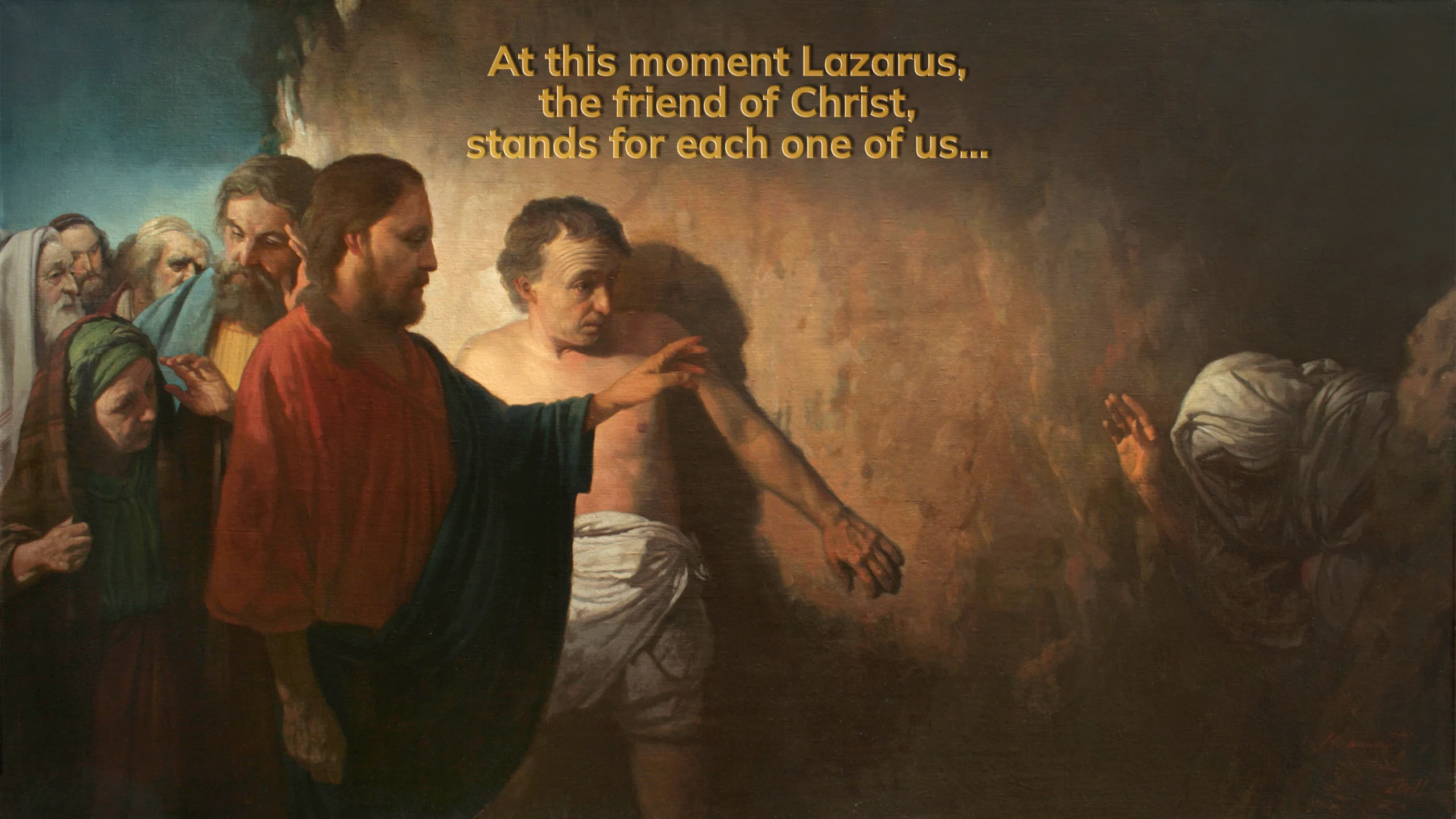
The Resurrection of Lazarus

Feb. 01, 2026
Simeon the Sentry

Jan. 11, 2026
The Suffering Servant

Jan. 04, 2026
The Epiphany

Dec. 28, 2025
Massacre of the Holy Innocents

Dec. 21, 2025
The King’s Arrival
Talks Archive
I have come to bring fire on the earth, and how I wish it were already kindled!
This line tells us so much about Jesus, and His mission. A lot of sermons seem to want to play down the fiercer and more challenging aspects of Revelation. They present a God who is always kind, gentle, inclusive and compassionate. But, there’s more to God than this in the Bible if you read it for yourself. The God of the New Testament as well as the Old Testament is indeed kind, gentle, inclusive and compassionate. But He is also fierce, demanding, frightening and judgmental. Now being judgmental is totally unacceptable in our culture. In a permissive society you can do whatever you want – as long as it’s consensual – but the one thing you just cannot do is be judgmental. But I’m afraid that in the Bible God is extremely judgmental. In our Gospel today Jesus is even frightening. He incarnates this judgmental God of the Bible. When He says that He has come to bring fire on the earth the word in the Greek is ballein, which means “to throw”. He has come throw fire! He’s not here to light a gentle, warm, cosy fire for us in our fireplace. He has come to throw fire on the earth! He is the incarnation of the God who sent fire to destroy the cities of Sodom and Gomorrah, and sent fire to consume the enemies of the Prophet Elijah. So Jesus continues Do you think I came to bring peace on earth? No, I tell you, but division.From now on there will be five in one family divided against each other, three against two and two against three. This is Jesus talking, the One who has come to throw fire on the earth.
You might say, “Isn’t He supposed to be the Prince of Peace? Isn’t that what the angels called Him on the first Christmas morning?” Well, here He is bringing not peace but a sword. “I’ve come for division!” He says. “I’ve come to even divide households and families, to set you against your own mother or your brother.”
Jesus seems to be harsh and dreadful sometimes. But isn’t He supposed to be meek and mild? Which is it then? Surely He can’t both? He can’t be harsh and mild?
But then what does God’s love look like in the context of a world that’s gone wrong? Love is what God gives. That is all He gives. Love is what God is. God is love. It’s as simple as that. He never changes. But, but, how we perceive that love does change. That love is perceived by our fallen minds. And whatever is received is received according to the mode, the capacity of the recipient. So I could recite Shakespeare to my three year old but she wouldn’t be able to take it in yet. She couldn’t receive it. It would just be gobbledygook to her. In the same way the sun always shines, but on a cold and cloudy day we can’t receive all its light and warmth. In the same way, we can’t receive the love of God when the cloud of sin covers our sky. And then that love can appear to be fierce, demanding, frightening and judgmental to our fallen minds.
Or if we’re in a bad mood, we may not mind having someone around who is also in a bad mood, or someone who also has a hangover. The person who would be really aggravating to have around is someone in a good mood, someone who is relentlessly positive. We might well want to ask them to stop whistling, to wipe that grin off their face, to stop smirking. But it’s not that there is something wrong with their cheerfulness. There’s something wrong with us. “It’s not you it’s me.” They are annoying because of the way we feel, because of our hangover. Or if we had been in a cave in total darkness and we were suddenly brought out into the light, it might be painful. The light hasn’t changed. It’s beautiful and pure and illuminating. But after being stuck in a cave it hurts our eyes.
G K Chesterton said, “We’re all in the same boat, and we’re all seasick.” It’s as if we’re all hung over or used to being in darkness. This is what the doctrine of Original Sin means.
Therefore, when Jesus comes, He is as painful as the cheerful friend, as painful as the light after the darkness of the cave. He comes as a troublemaker, as an interrupter of our lives, as a disturber of our peace. He says: Think not that I am come to send peace on earth: I came not to send peace, but a sword. He doesn’t want to afflict us. But He comes as God’s own order, and that order will be received according to the mode of the recipient, according to the capacity of each one of us to receive it. Maybe we will only have the capacity to receive it as judgement, with fear. Jesus has to clear the ground in us. He has to burn away all that resists God’s will.
Therefore, there is no contradiction between God’s gentleness and His fierceness. There is no contradiction between the God of the Old Testament and the God of the New Testament. There is no contradiction between the God who is gentle and the God who is fierce. We receive His love according to our capacity. If we’re in a good spiritual space then we will receive His love as gentle and kind and pleasant. But if we are off kilter, and stuck in our sin then maybe we will perceive God’s love as judgment.
In our second reading, St Paul exhorts us: Therefore, since we are surrounded by such a great cloud of witnesses, let us throw off everything that hinders and the sin that so easily entangles. And let us run with perseverance the race marked out for us, fixing our eyes on Jesus, the pioneer and perfecter of faith. If we are running a race we have to train, we have to get rid of certain things, we have to have a very clear sense of our goal. Jesus says: I have come to bring fire on the earth because I have come to burn away in you all that is keeping you from me. I want to burn away the sin and dysfunction and disorder in you. I want you to keep your eyes fixed on me. Rid yourself of the burden of sin. Look at me. Keep your eyes fixed on me.
Amen.
The Rev’d Dr James Lawson,
St Mary Magdalene Enfield, 17/08/2025


