

Suspended by the grace of God
Read Time: 5 mins
May I speak in the name of God, Father, Son and Holy Spirit. Amen.
I sometimes wonder what it must have been like to hear Jesus preaching and talking and responding to people asking questions and making points at him. Even the shortest bit of dialogue must have taken quite a lot to process, and here we have two very different short little exchanges—one a discussion about two recent catastrophes; and another a short parable. And they are both partly about what does it mean to say God is in control? Is God in control of the world, and do you want God to be in control of your life? Do you really? Would you trust enough?
Because you may not like the idea of handing your life over to God. As Graeme Greene’s whiskey priest says: God is love. [But] we wouldn’t recognise that love… It would be enough to scare us—God’s love. It set fire to a bush in the desert, didn’t it [for Moses], and it smashed open graves and set the dead walking in the dark. Oh, a man like me would run a mile to get away if he felt that love around.
I remember once at the end of an Alpha course I attended we were all sitting in prayer, and asked to invite the Holy Spirit into our lives, to let God take our lives wherever God wanted, to let God fill our very being and let God do whatever… And I felt the importance of that decision in that moment, to irrevocably change my life… and I… resisted. I didn’t want to give up control of my life! Now, in some respect, of course, I failed, and here I am before you, in a dog collar, speaking from a pulpit.
The love of God is infinitely more gracious and freeing than anything we can imagine. God has to work with us, useless clay, and stubborn-minded, and it can take time, but where the Spirit of the Lord, there the heart is free. If we trust God, even a little, to take control of our lives, then our lives over time will be immeasurably spiritually rewarded, because we will become more Christ-like, we will find that we have become closer to Him.
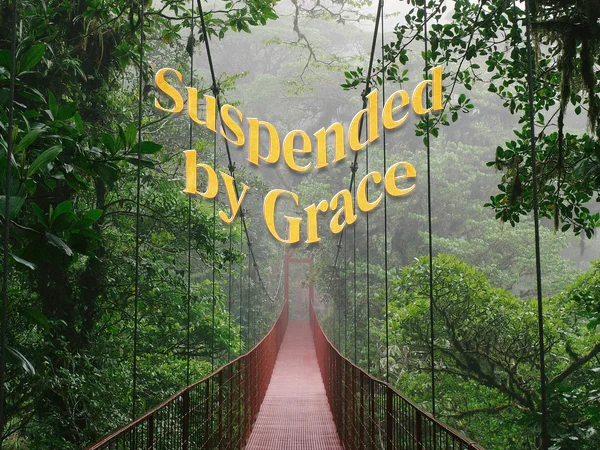
And our gospel passage helps us see that we are suspended by the grace of God in this world now, as it is anyway. God is supremely in control as it is, though it may not look like it.
Some of the bystanders make this point by telling Jesus about some Galilleans who had got caught up in some kind of insurrection in the city, whom Pilate had had killed while they were sacrificing in the temple courts. Justice is seen done, as seen by the fact that these unholy men’s blood became mixed with the blood of their worthless sacrifices. If God allowed it to happen in the Jerusalem temple, it’s clearly a judgment on those people. No, says Jesus. God isn’t behind things like political leaders murdering people, or towers randomly collapsing on people, or people getting sick, or people experiencing some kind of tragedy. God doesn’t control every little thing that happens; God is not the cause behind the pain and suffering in the world. Throughout the New Testament, all physical and spiritual suffering is directly or indirectly attributed not to God, but to Satan and other demonic entities. The thief comes only to kill, steal and destroy, Jesus says. The God whom Jesus reveals comes only to give abundant life. But this often causes people to question whether God has the ability to win in the end. Is God really in control?, because it may not seem like it.
In response, Jesus tells the parable of the barren fig tree. It may not look like God is in control. The world is barren in so many ways. Why doesn’t God come and stop the wars in the Holy Land, in Ukraine, in Syria, Yemen and the Sudan? Why delay? Where doesn’t Jesus return, as we are promised and expect? What’s the hold-up? The gardener says, “Let it alone… until I dig round it and put manure on it. It might still bear good fruit next year; if not, then it can be cut down.” God has ordered the course of history and appointed the hour of judgment. The measure of sin is full. Judgment is due, but God can hear the request and respond to prayers for mercy, and lengthen our period of grace. God’s grace can shorten the time of distress for God’s people, but can also lengthen the opportunity for stubborn-willed, callous-hearted unbelievers, including unbelieving Christians, to repent. All human existence, hourly threatened by the catastrophe, lives suspended in the interval of God’s grace. It is our duty in that circumstance to turn to God, and trust in God. The love of God is infinitely more gracious and freeing than anything we can imagine. For where the Spirit of the Lord, there the heart is free. You can trust God, for the pledge of God’s trust—is the cross.
Amen.
The Rev’d Michael Aylmer,
St Mary Magdalene Enfield, 23/03/2025
Sep. 27, 2026
Baptism
May. 17, 2026
Ulrich Zwingli and The Sausage

May. 10, 2026
Seeking Fulfilment?

May. 03, 2026
The way, the truth and the life

Apr. 19, 2026
Jesus, Peter and the Path
Apr. 12, 2026
Doubting Thomas?
Mar. 22, 2026
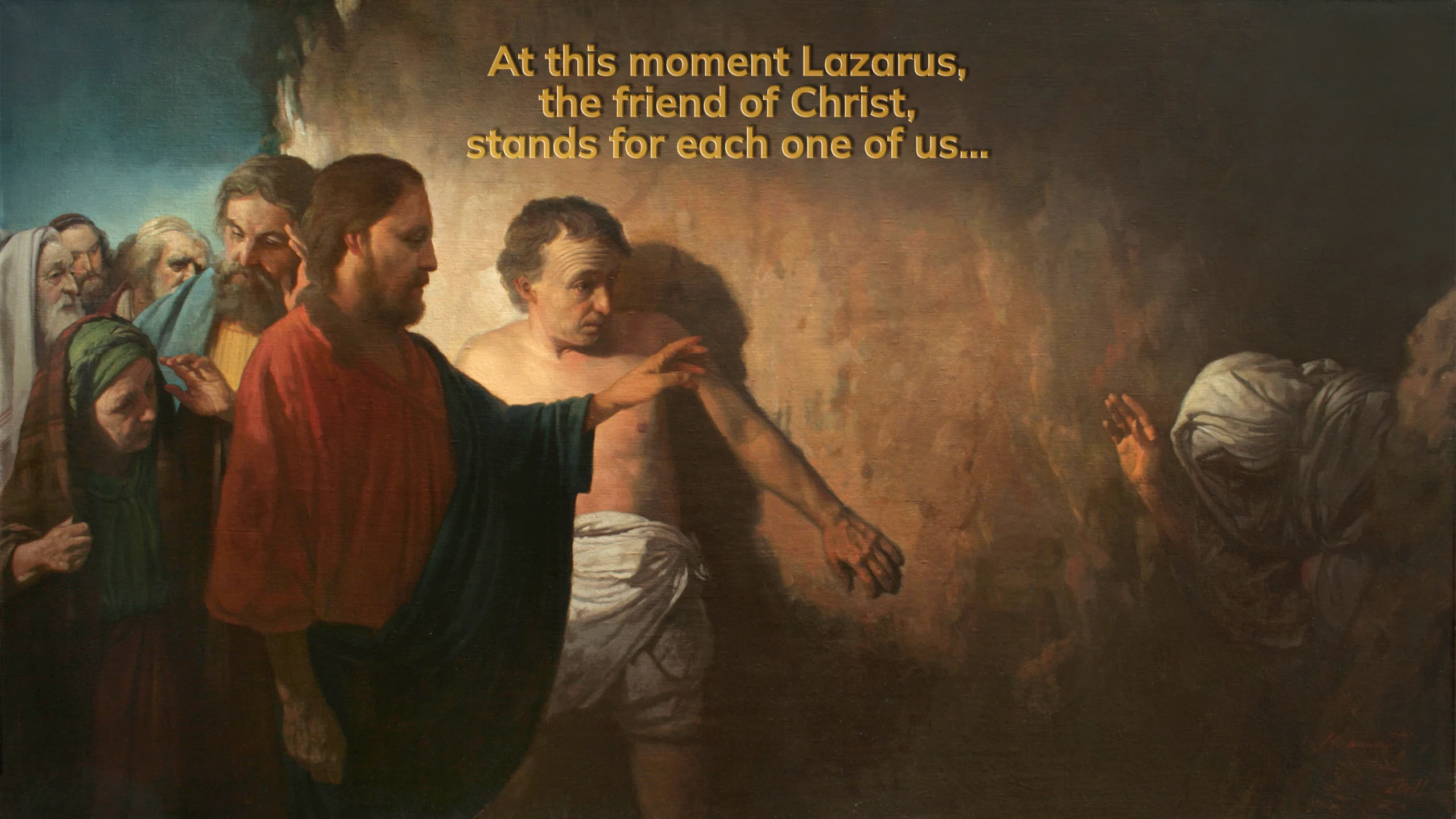
The Resurrection of Lazarus

Feb. 01, 2026
Simeon the Sentry

Jan. 11, 2026
The Suffering Servant

Jan. 04, 2026
The Epiphany

Dec. 28, 2025
Massacre of the Holy Innocents

Dec. 21, 2025
The King’s Arrival
Talks Archive
May I speak in the name of God, Father, Son and Holy Spirit. Amen.
I sometimes wonder what it must have been like to hear Jesus preaching and talking and responding to people asking questions and making points at him. Even the shortest bit of dialogue must have taken quite a lot to process, and here we have two very different short little exchanges—one a discussion about two recent catastrophes; and another a short parable. And they are both partly about what does it mean to say God is in control? Is God in control of the world, and do you want God to be in control of your life? Do you really? Would you trust enough?
Because you may not like the idea of handing your life over to God. As Graeme Greene’s whiskey priest says: God is love. [But] we wouldn’t recognise that love… It would be enough to scare us—God’s love. It set fire to a bush in the desert, didn’t it [for Moses], and it smashed open graves and set the dead walking in the dark. Oh, a man like me would run a mile to get away if he felt that love around.
I remember once at the end of an Alpha course I attended we were all sitting in prayer, and asked to invite the Holy Spirit into our lives, to let God take our lives wherever God wanted, to let God fill our very being and let God do whatever… And I felt the importance of that decision in that moment, to irrevocably change my life… and I… resisted. I didn’t want to give up control of my life! Now, in some respect, of course, I failed, and here I am before you, in a dog collar, speaking from a pulpit.
The love of God is infinitely more gracious and freeing than anything we can imagine. God has to work with us, useless clay, and stubborn-minded, and it can take time, but where the Spirit of the Lord, there the heart is free. If we trust God, even a little, to take control of our lives, then our lives over time will be immeasurably spiritually rewarded, because we will become more Christ-like, we will find that we have become closer to Him.
And our gospel passage helps us see that we are suspended by the grace of God in this world now, as it is anyway. God is supremely in control as it is, though it may not look like it.
Some of the bystanders make this point by telling Jesus about some Galilleans who had got caught up in some kind of insurrection in the city, whom Pilate had had killed while they were sacrificing in the temple courts. Justice is seen done, as seen by the fact that these unholy men’s blood became mixed with the blood of their worthless sacrifices. If God allowed it to happen in the Jerusalem temple, it’s clearly a judgment on those people. No, says Jesus. God isn’t behind things like political leaders murdering people, or towers randomly collapsing on people, or people getting sick, or people experiencing some kind of tragedy. God doesn’t control every little thing that happens; God is not the cause behind the pain and suffering in the world. Throughout the New Testament, all physical and spiritual suffering is directly or indirectly attributed not to God, but to Satan and other demonic entities. The thief comes only to kill, steal and destroy, Jesus says. The God whom Jesus reveals comes only to give abundant life. But this often causes people to question whether God has the ability to win in the end. Is God really in control?, because it may not seem like it.
In response, Jesus tells the parable of the barren fig tree. It may not look like God is in control. The world is barren in so many ways. Why doesn’t God come and stop the wars in the Holy Land, in Ukraine, in Syria, Yemen and the Sudan? Why delay? Where doesn’t Jesus return, as we are promised and expect? What’s the hold-up? The gardener says, “Let it alone… until I dig round it and put manure on it. It might still bear good fruit next year; if not, then it can be cut down.” God has ordered the course of history and appointed the hour of judgment. The measure of sin is full. Judgment is due, but God can hear the request and respond to prayers for mercy, and lengthen our period of grace. God’s grace can shorten the time of distress for God’s people, but can also lengthen the opportunity for stubborn-willed, callous-hearted unbelievers, including unbelieving Christians, to repent. All human existence, hourly threatened by the catastrophe, lives suspended in the interval of God’s grace. It is our duty in that circumstance to turn to God, and trust in God. The love of God is infinitely more gracious and freeing than anything we can imagine. For where the Spirit of the Lord, there the heart is free. You can trust God, for the pledge of God’s trust—is the cross.
Amen.
The Rev’d Michael Aylmer,
St Mary Magdalene Enfield, 23/03/2025


